I know you with 〜のこと知ってる
Grammar Explanation: Referring to a person with 〜のこと
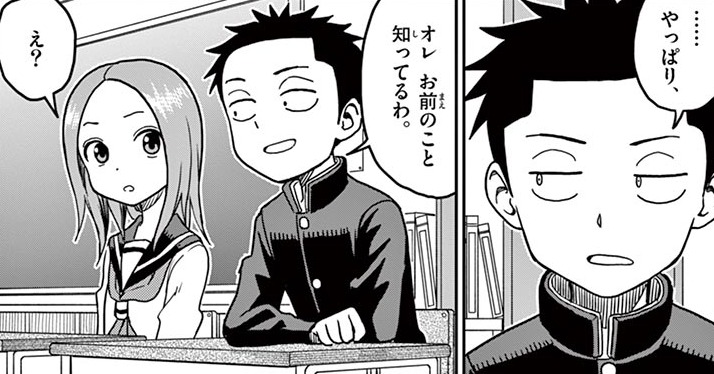
It’s Chii’s first day of middle school. During self-introductions, the boy sitting behind her keeps staring at her, then asks whether they’ve met before. Chii teases him by asking if he’s hitting on her, and he insists he’s just a little curious.
- 男の子:
- 「……やっぱり、」
- “...Yeah, I'm sure of it.”
- 「オレ お前のこと知ってるわ。」
- “I know you.”
- ちー:
- 「え?」
- “Huh?”
Key Points
- のこと after お前 makes Chii the person he knows. The full form is お前のことを知っている.
- 知っている works with or without のこと. Without it, it leans toward knowing someone personally. With のこと, it can lean toward knowing things about them. Here the boy just means he’s sure he knows who she is.
- “Know” is 知っている, with ている for the state of knowing. 知ってる drops the い. The negative is 知らない, without ている.
- やっぱり means “just as I thought”. He had wondered whether they’d met, and now he’s decided they have.
- わ at the end of a statement is a light, casual assertion. Male speakers use it this way too.
- お前 is a blunt “you”, common among boys. It sounds forward when used with a girl he’s just met.
Vocabulary
やっぱり (As expected)
やっぱり shows that something turned out as the speaker thought, or that the speaker is coming back to an earlier choice: “after all”.
オレ (I)
オレ is a katakana spelling of おれ, a casual, masculine word for “I”. It is also written 俺.
お前 (You)
お前 is a casual, rough word for “you”. Men often use it toward people of equal or lower standing.
こと (Thing)
こと is an abstract thing, matter, or fact, as opposed to a physical object. It also turns a verb phrase into a noun, as in 見たことがある. It is also written 事.
知る (To know)
知る means to learn or come to know a fact or person. In the form 知っている, it describes already knowing.