I say that because I thought it up with だって
Grammar Explanation: That said with だって
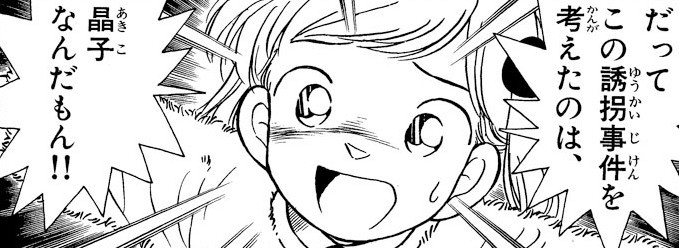
A fake kidnapping ploy turns into an actual kidnapping. After the kidnapped child is safe, her father goes after their butler for concocting the scheme. The daughter, Akiko, protects the butler, saying she’s the bad one.
- 晶子:
- 「だってこの誘拐事件を考えたのは、晶子なんだもん!!」
- “I say that because I'm the one who thought up the kidnapping plot!”
- Literal: “Because the one who thought up this kidnapping case was Akiko!!”
Key Points
1だって gives the reason for what she just said
- Here だって means “because” in an emotional, childlike defense.
- Akiko is explaining why she said she is the bad one.
2だもん adds childish insistence
- Final だもん sounds like an emotional justification a child would make.
Vocabulary
この (This)
この means “this” or “these” and comes directly before a noun. It points to something near the speaker or something the speaker is referring to in the conversation.
See Also
- Grammar: That said with だって
- Future entry: Past tense with 〜た・〜だ
- Grammar: Marking the direct object with を
- Grammar: Marking the topic with は and も
- Kanji: Abduction and taking away with 拐
名探偵コナン © its respective creators. It is used here for educational commentary.