If you feel up to kendo with 気が向く
Idiom Explanation: To be in the mood for something with 気が向く
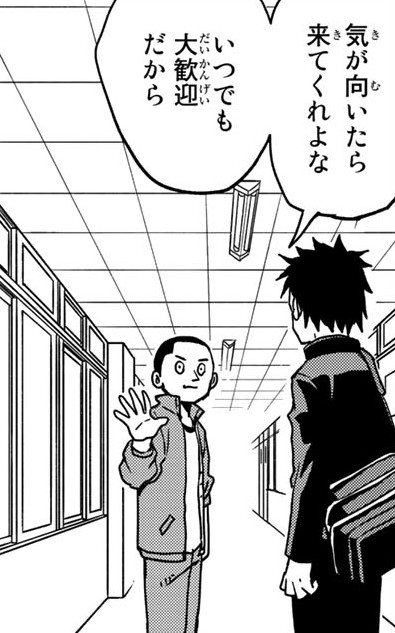
A member of the kendo club asks Ayumu to join the club, so they can win the next tournament. Although Ayumu is well known for his kendo prowess in middle school, he’s in the shogi club now, and rejects the request.
- 生徒:
- 「気が向いたら来てくれよな」
- “Come by whenever you feel like it.”
- Literal: “If your feelings turn that way, come by.”
- 「いつでも大歓迎だから」
- “You're always welcome.”
Key Points
1気が向いたら = “if you feel like it”
- 気が向く means your interest or inclination turns toward doing something.
- Here 気が向いたら makes the invitation low-pressure: come if the mood strikes you.
2What is omitted after 向いたら
- The fuller idea is 剣道部に来る気が向いたら “if you feel inclined to come to the kendo club”.
- Japanese can leave the destination or activity implicit when the next verb, 来て, makes it clear.
3Casual request: 来てくれよな
- 来てくれ is a casual request, literally like “do me the favor of coming”.
- The ending よな sounds friendly and insistent.
4いつでも大歓迎だから softens the invitation
- いつでも means “anytime”, so the second line reinforces that there is no deadline or pressure.
- だから gives the reason behind the invitation: because Ayumu is always welcome, he can drop by whenever he feels up to it.
Vocabulary
来る (To come)
来る means to come or move toward the speaker or the place being discussed.
大歓迎 (Being very welcome)
大歓迎 means a warm or enthusiastic welcome.
See Also
- Idiom: To be in the mood for something with 気が向く
- Grammar: Receiving kindness with 〜てくれる
- Grammar: The plain imperative
それでも歩は寄せてくる © its respective creators. It is used here for educational commentary.