In another world with 異世界
Kanji Explanation: Difference and strangeness with 異
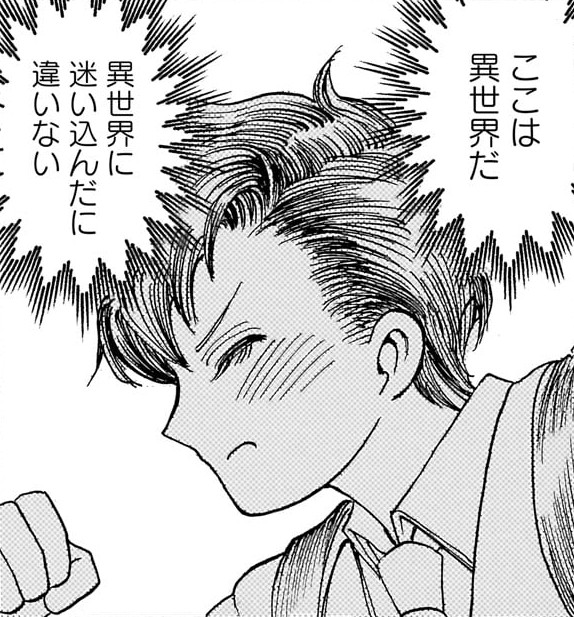
Zen lived in a glittering, idyllic town until his family moved. During his first day of school, he found everyone to be glaring and rugged. Rather than being gentle and playful, his classmates sought a brawl and chased after him.
- 禅:
- 「ここは異世界だ」
- “This is another world.”
- 「異世界に迷い込んだに違いない」
- “I must have wandered into another world.”
- Literal: “There's no doubt I've wandered into another world.”
Key Points
1異世界 here means “another world”
- 異世界 is literally “different world” or “other world”, and in this scene it means “another world” because everything feels completely unlike Zen’s normal life.
- The kanji 異 adds the idea of difference, so 異世界 feels stronger than just “a different place”.
2ここは異世界だ = “This is another world”
- ここは〜だ is a plain statement of identification: “As for here, it is ~”
- In his minid, Zen is not making a careful, literal claim about fantasy-world travel; he is blurting out how alien this place feels to him.
3迷い込む = “to wander into”
- 迷い込む combines 迷う (to lose one’s way) with 込む (to go into), giving the sense of accidentally ending up deep inside somewhere.
4に違いない shows strong certainty
- 〜に違いない means “there is no mistaking it” / “must be” and shows a strong conclusion based on what the speaker sees.
Vocabulary
異世界 (Other world)
異世界 means another world or dimension. In modern fiction, it usually means a fantasy world of magic and monsters.
See Also
- Kanji: Difference and strangeness with 異
- Future entry: Past tense with 〜た・〜だ
- Grammar: The copula だ
- Grammar: Negation with 〜ない
- Grammar: Marking the topic with は and も
- Kanji: Boundaries and worlds with 界
キラキラとギラギラ © its respective creators. It is used here for educational commentary.