Interested in him with 気がある
Idiom Explanation: Having an interest in something with 気がある
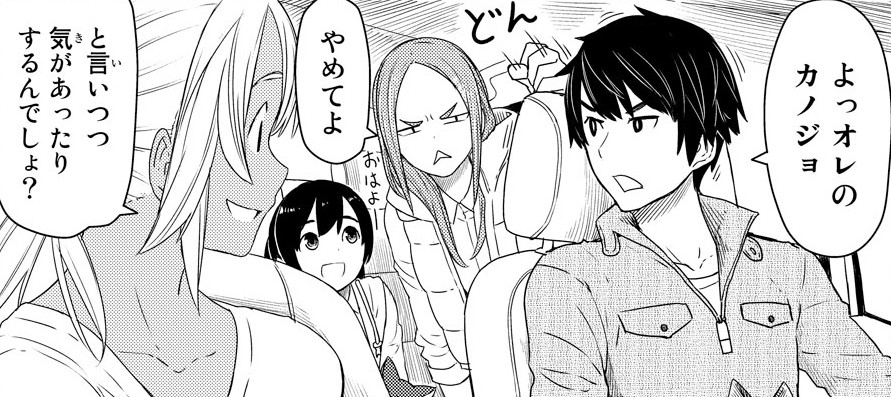
Makoto and her family head out on a trip to the river. When they stop to pick up Kei’s friend Nao, Akane greets her with, “Howdy, Kei’s girlfriend!” Nao tells her she’s wrong.
- 圭:
- 「よっオレのカノジョ」
- “Yo, my girlfriend.”
- なお:
- 「やめてよ」
- “Stop that!”
- 茜:
- 「と言いつつ気があったりするんでしょ?」
- “Although you say that, you're interested in him, aren't you?”
Key Points
1気がある means to be interested romantically here
- Akane suggests Nao might have feelings for Kei.
- The context of being called his girlfriend makes the romantic reading clear.
2と言いつつ works like と言いつつも here
- Nao says “stop that”, but Akane teases that she may still be interested.
- The omitted も leaves the same contrast: “although you say that”.
3気があったりする softens the accusation
- 〜たりする makes the suggestion indirect: “maybe you’re interested or something”.
- Akane is teasing Nao rather than stating her feelings as a fact.
4でしょ? makes it a leading question
- Akane expects the idea to land as plausible or embarrassing.
- The line reads as playful teasing, not a neutral request for information.
Vocabulary
| Word | English | Meaning |
|---|---|---|
| オレ | I | オレ is a katakana spelling of おれ, a casual, masculine word for “I”. It is also written 俺. |
| カノジョ | Girlfriend | カノジョ is a girlfriend. As 彼女, it also means “she”. |
| やめる | To stop | やめる is to stop doing something, or to quit. やめて means “stop it”. It is also written 止める. |
| 言う | To say | 言う means to say or tell. It can also mean to call something by a particular name. |
| 気がある | To be interested | 気がある is to have a romantic interest in someone. It also means to be willing to do something. |
| する | To do | する is to do or perform something. It also turns many nouns into verbs, as in 勉強する. |
See Also
- Idiom: Having an interest in something with 気がある
- Grammar: Contradicting with 〜つつも
- Grammar: Quoting and reporting with と and って
- Grammar: Presuming with 〜だろう and 〜でしょう
- Grammar: Informing with よ
- Grammar: Listing example actions with 〜たり〜たりする
ふらいんぐうぃっち © its respective creators. It is used here for educational commentary.