It's not like I'm a grade-schooler with 〜じゃあるまいし
Grammar Explanation: It's not the case with 〜ではあるまいし
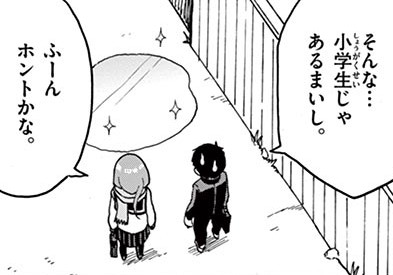
Seeing a frozen puddle on the ground, Nishikata is excited at the thought of picking it up and holding it. Takagi asks if this is what he’s thinking, and he quickly denies it.
- 西片:
- 「そんな… 小学生じゃあるまいし。」
- “It's not like I'm some kind of...grade-schooler.”
- Literal: “That kind of... it's not as if I'm a grade-schooler.”
- 高木:
- 「ふーん。ホントかな。」
- “Hm, I wonder...”
Key Points
1〜じゃあるまいし = it’s not like…
- This pattern rejects a comparison or assumption.
- Here Nishikata means “I’m not some little kid like that.”
2小学生じゃあるまいし
- 小学生 is the comparison he rejects.
- The implication is that getting excited over frozen puddles would be childish.
3The sentence omits the rest because it is obvious
- The line does not fully spell out “I wouldn’t do that.”
- Japanese often leaves the conclusion unstated when the intended meaning is already clear.
Vocabulary
小学生 (Elementary school student)
小学生 means an elementary school student. In Japan, this usually means a child in grades 1 through 6.
See Also
- Grammar: It's not the case with 〜ではあるまいし
- Grammar: Wondering with かな
- Kanji: Learning and schooling with 学
- Kanji: Schools and checking with 校
からかい上手の高木さん © its respective creators. It is used here for educational commentary.