It's not like this is science fiction with 〜じゃあるまいし
Grammar Explanation: It's not the case with 〜ではあるまいし
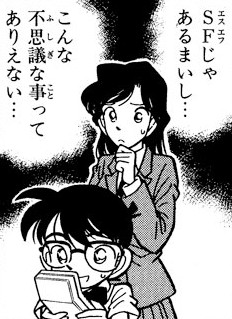
Evidence piles up for Ran that Conan, the smart young boy staying with her family, may actually be Shin’ichi, her missing childhood friend. She’s convinced that he’s Shin’ichi on the inside, but the sticking point is how he went from being a teenager to a child.
- 蘭:
- 「SFじゃあるまいし…」
- “It's not like this is sci-fi.”
- Literal: “It's not as if this is sci-fi...”
- 「こんな不思議な事ってありえない…」
- “Such an incredible thing is inconceivable...”
Key Points
- This is a colloquial form of ではあるまいし.
- Ran is rejecting the idea by saying “it’s not like this is science fiction”.
- She brings up science fiction as the kind of world where such a thing might happen.
- Then she uses じゃあるまいし to say real life is not that kind of setting.
Vocabulary
| Word | English | Meaning |
|---|---|---|
| ある | To exist | ある is to exist or be in a place, for things and plants rather than people or animals. It also means to have something, or for an event to take place. |
| こんな | Like this | こんな describes something like the thing in front of the speaker or the thing just mentioned. |
| 不思議 | Mystery | 不思議 describes something strange that cannot be explained. |
| 事 | Thing | 事 is an abstract thing, matter, or fact. It also turns a verb phrase into a noun, as in 見た事がある. It is often written こと. |
| ありえない | Impossible | ありえない describes something that cannot happen or that the speaker refuses to believe. In casual speech, it also means “ridiculous” or “no way”. |
See Also
- Grammar: It's not the case with 〜ではあるまいし
- Kanji: Matters and events with 事
- Kanji: Negation and lack with 不