It's too late to compliment my outfit with 今更
Vocabulary Explanation: After all this time with 今更
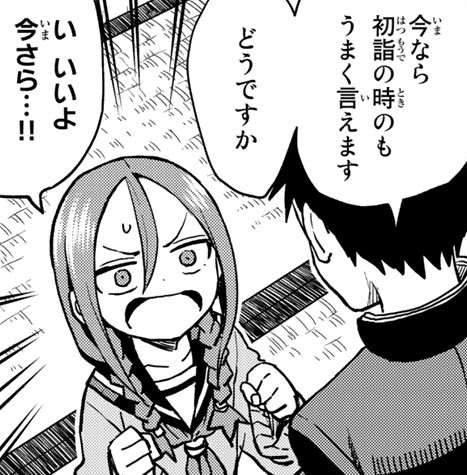
Ayumu heavily compliments Urushi on her looks wearing a sweater that’s a little too big. He quietly congratulates himself, and when Urushi questions him on it, Ayumu explains that he’s regretted his inability to find the words to compliment her outfit during their New Year’s shrine visit.
- 歩:
- 「今なら初詣の時のもうまく言えます。どうですか」
- “I can properly say it now for the New Year's shrine visit. How about it?”
- うるし:
- 「い いいよ。 今さら…!!」
- “It's okay. It's too late!”
- Literal: “I-it's fine. Now, after all this...!!”
Key Points
1今さら means too late at this point
- 今さら marks something as coming after the proper timing has already passed.
- Urushi means a delayed compliment about the shrine-visit outfit would no longer land the way it should have then.
2いいよ declines the offer
- In this context いいよ means “it’s okay” as a refusal, not enthusiastic approval.
- Urushi is embarrassed and trying to stop Ayumu from continuing.
3今なら contrasts now with 初詣の時
- Ayumu says he could express the compliment properly now.
- That contrast sets up Urushi’s 今さら, because the relevant moment was the New Year’s shrine visit.
Vocabulary
初詣 (First shrine visit of the year)
初詣 means the first visit to a shrine or temple in the New Year.
言う (To say)
言う means to say or tell. It can also mean to call something by a particular name.
See Also
- Vocabulary: After all this time with 今更
- Grammar: Marking the topic with は and も
- Grammar: If that's the case with なら
それでも歩は寄せてくる © its respective creators. It is used here for educational commentary.