James's rental is a stolen car with 盗難車
Kanji Explanation: Vehicles and wheels with 車
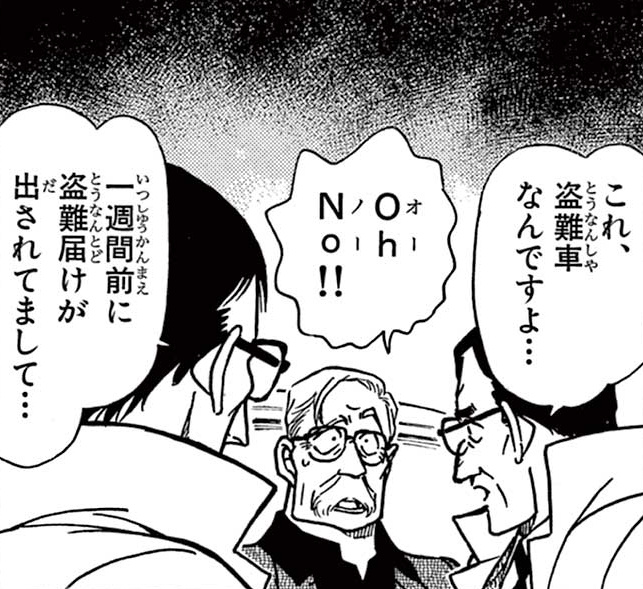
James Black leaves a show and returns to his car. Before he can get in, two men stop him. They say they are police officers and ask whether the car is his. James tells them it is a rental.
- Man 1:
- 「これ、盗難車なんですよ…」
- “This is a stolen car...”
- James:
- 「Oh no!!」
- “Oh no!!”
- Man 2:
- 「一週間前に盗難届けが出されてまして…」
- “A theft report was filed a week ago...”
Key Points
1盗難車 = stolen car
- 盗難 means theft, and 車 means car here. The man says James’s rental is a stolen car.
2これ、〜なんですよ = this is…
- これ points to the car. The man uses なんですよ to explain why he stopped James.
3盗難届けが出されてまして = a theft report was filed
- 盗難届け is a report that something was stolen. The second man says someone filed one a week earlier.
Vocabulary
| Word | English | Meaning |
|---|---|---|
| これ | This | これ points to something close to the speaker, or to the thing just mentioned. |
| 盗難車 | Stolen car | 盗難車 means a stolen car, a vehicle reported or known to have been stolen. |
| 一週間 | One week | 一週間 is a period of seven days. |
| 前 | Front | 前 is the front of something. It also means an earlier time, as in 三年前, “three years ago”. |
| 盗難 | Theft loss | 盗難 is having something stolen, or the theft itself. |
| 届け | Report | 届け is an official report or notice filed with an office, such as the police. |
| 出す | To put out | 出す is to take something out, send it out, or hand it in. After a verb stem, it means to start doing something. |
See Also
- Kanji: Vehicles and wheels with 車
- Grammar: Reasoning with 〜のだ
- Grammar: Receptive verbs with 〜れる
- Grammar: Informing with よ
- Grammar: Consonant doubling with 促音
- Kanji: Going out and emerging with 出
- Kanji: Spaces and intervals with 間
名探偵コナン © its respective creators. It is used here for educational commentary.