Keeping a museum from shutting down with 事件
Kanji Explanation: Continuation and connection with 続
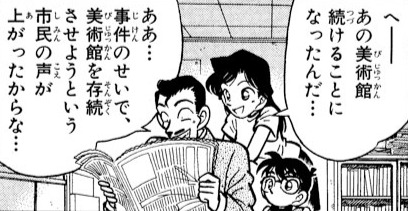
Following the solving of a murder case, Detective Mouri reads an article about the museum where the murder took place.
- 蘭:
- 「へーーー あの美術館続けることになったんだ…」
- “Wow... So they decided to keep the art museum open after all...”
- 毛利:
- 「ああ… 事件のせいで美術館を存続させようという市民の声が上がったからな…」
- “Yeah... Because of the incident, there was a public outcry to keep the art museum open...”
- Literal: “Yeah... Because of the incident, citizens' voices rose up saying to let the art museum continue existing...”
Key Points
1存続させよう = “try to keep it going”
- 存続 means continued existence, so 美術館を存続させる is “to keep the museum going” or “to keep it from shutting down”.
2〜ようという marks the content of the public demand
- 美術館を存続させよう uses the volitional form and means “let’s keep the museum open” or “we should preserve the museum”.
- With という市民の声, that quoted idea becomes the thing people were saying: “public voices calling for the museum to stay open”.
3事件のせいで = “because of the incident”
- 〜のせいで gives the cause behind what followed. The incident triggered the reaction from the public.
- In context, the murder case made people pay attention to the museum and speak up to save it.
4続けることになった = “it was decided to continue”
- In Ran’s line, 美術館続けることになった means “it ended up being decided that they would keep it open”.
- ことになった often presents a decision or outcome rather than a personal choice made on the spot.
Vocabulary
あの (That)
あの comes before a noun to mean “that” or “those”. It points to someone or something away from both speakers, or something they both know about.
美術館 (Art museum)
美術館 means an art museum, where artworks are displayed and preserved.
事件 (Incident)
事件 means an incident or event that attracts public attention.
存続 (Survival)
存続 means continued existence, especially when an organization or institution remains in operation.
市民 (Citizens)
市民 means a citizen, city resident, or member of a civic community.
声 (Voice)
声 means a voice or an animal’s cry.
See Also
- Kanji: Continuation and connection with 続
- Future entry: Past tense with 〜た・〜だ
- Grammar: To end up being with 〜ことになる
- Kanji: Matters and events with 事
名探偵コナン © its respective creators. It is used here for educational commentary.