Keeping my dad company with 相手
Kanji Explanation: Mutuality and appearance with 相
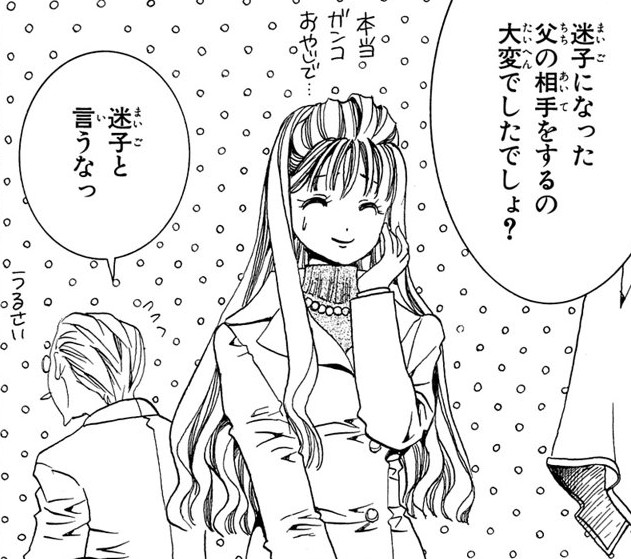
Akari encounters an older gentleman looking for a police box, so he can report his missing daughter and son-in-law. Akari offers to take him around and see if they can find the couple. Once they are reunited, the daughter thanks Akari for finding her father.
- 娘:
- 「迷子になった父の相手をするの大変でしたでしょ?」
- “It must have been tough dealing with my dad when he got lost, right?”
- Literal: “It must have been hard being the companion for my father after he got lost, right?”
- 「本当ガンコおやじで…」
- “He really is a stubborn old man...”
- 父さん:
- 「迷子と言うなっ」
- “Don't say lost!”
- 「うるさい」
- “Annoying...”
Key Points
1相手をする = to deal with or keep someone company
- In this scene, 相手をする means Akari had to look after the father and stay with him.
- It is more than just “opponent” or “partner”; the expression means taking on someone as the person you are occupied with.
2の turns the father into the person being dealt with
- 迷子になった父の 相手をする means “to deal with the father who got lost”.
- The clause before の describes which father she is talking about.
3でしたでしょ asks for agreement
- 大変でしたでしょ? means “that was tough, right?”
- The daughter assumes the effort was obvious and asks for confirmation sympathetically.
Vocabulary
大変 (Serious)
大変 means serious, terrible, or difficult. As an adverb, it means “very”.
本当 (Truth)
本当 means truth, real, or really.
迷子 (Lost child)
迷子 is someone who is lost, especially a child separated from an adult. It can also describe a lost pet or someone who does not know where to go.
See Also
- Kanji: Mutuality and appearance with 相
- Future entry: Past tense with 〜た・〜だ
- Grammar: Marking the direct object with を
- Grammar: Quoting and reporting with と and って
- Kanji: Childhood and small things with 子
- Kanji: Origins and main things with 本
ARIA The MASTERPIECE © its respective creators. It is used here for educational commentary.