Kept waiting countless times with 〜される
Grammar Explanation: Being made to do with 〜させられる
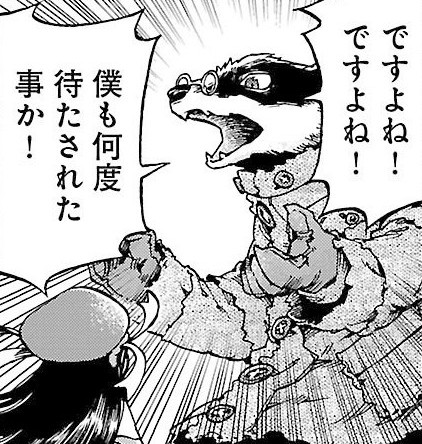
Hakumei and Mikochi visit Kate, a badger who makes canelés deep in the forest, hoping to sell them at the shop where Mikochi works. Kate turns them down when he learns the shop belongs to Suzumi, but offers to show them how he makes canelés. He warns that the work is hard for anyone who’s bad at waiting, and Mikochi says she’s good at it, since her manager often keeps her waiting.
- ケイト:
- 「ですよね! ですよね! 僕も何度待たされた事か!」
- “Right?! Right?! I can't tell you how many times I've been kept waiting too!”
- Literal: “Right?! Right?! How many times have I too been made to wait!”
Key Points
1待たされる, “be kept waiting”
- 待つ is “wait”. Its causative 待たせる means “make someone wait”, and the causative-receptive 待たされる puts the person left waiting in the subject’s seat: “be kept waiting”.
- Kate doesn’t say who kept him waiting. Mikochi just complained about her manager, Suzumi, so that’s who he means. Leaving the causer unsaid is common when context makes it clear.
- 待たされる is the short form of 待たせられる. For godan verbs like 待つ, the short form is the one you’ll usually hear.
2何度〜事か, “I can’t count how many times”
- 何度 is “how many times”, and 〜事か after a clause makes an exclamation rather than a question. Together they mean “how many times I’ve…!”, with the sense that it’s happened far too often.
- The 事 here is the same word often written in kana as こと.
3ですよね! and 僕も
- ですよね is enthusiastic agreement, “Right?” or “I know!” Kate says it twice because Mikochi has hit on a sore spot.
- も after 僕 is “me too”. Mikochi’s line 店長にもよく待たされますし used も the same way, so Kate is adding himself to her list of victims.
Vocabulary
僕 (I)
僕 means “I” or “me”. Boys and men commonly use it in casual speech, and it sounds softer than 俺.
待つ (To wait)
待つ is to stay until someone comes or something happens.
事 (Thing)
事 is an abstract thing, matter, or fact. It also turns a verb phrase into a noun, as in 見た事がある. It is often written こと.
See Also
- Grammar: Being made to do with 〜させられる
- Grammar: Marking the topic with は and も
- Kanji: Matters and events with 事
- Kanji: Measures and degrees with 度
ハクメイとミコチ © its respective creators. It is used here for educational commentary.