Leaving the zoo quickly after entering with 〜てから
Grammar Explanation: After doing with 〜てから
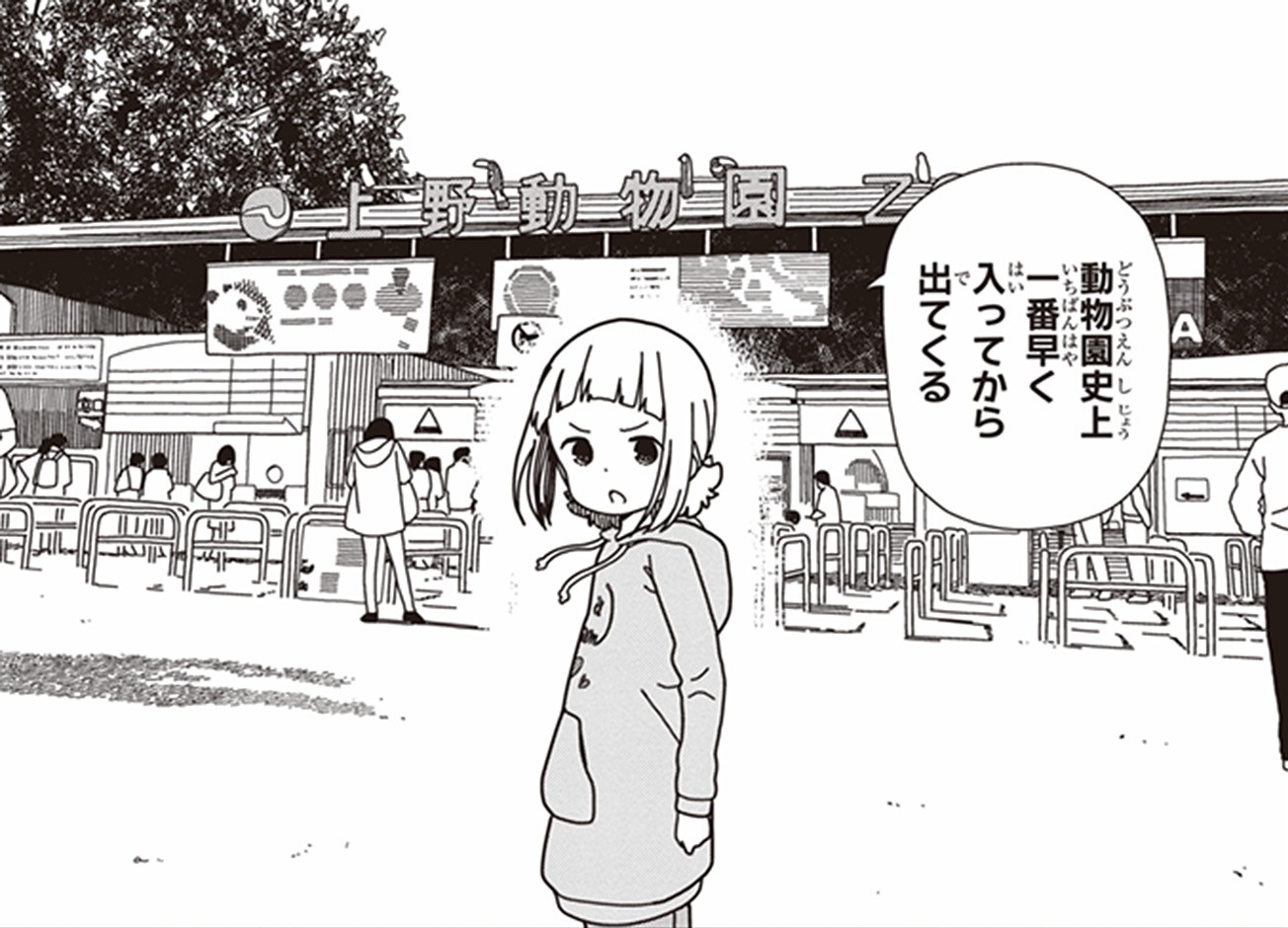
While trying to find something to do, Sacchan and her friends pass by the zoo, which is free for children to enter. Yui asks if Sacchan plans to enter the zoo.
- さっちゃん:
- 「動物園史上一番早く入ってから出てくる」
- “The fastest in zoo history to enter and then leave.”
- Literal: “The fastest in zoo history to enter and after that come out.”
Key Points
1入ってから出てくる marks order
- Sacchan would first enter the zoo, and then come out.
- 〜てから makes the sequence explicit.
2出てくる includes returning outward
- 出てくる means to come out toward the current outside viewpoint.
Vocabulary
| Word | English | Meaning |
|---|---|---|
| 動物園 | Zoo | 動物園 means a zoo, where animals are kept and displayed to the public. |
| 史上 | In history | 史上 means “in history”. It often appears in phrases such as “the first in history” or “the greatest in history”. |
| 一番 | Number one | 一番 means number one, first, or best. As an adverb, it means “most”. |
| 早く | Quickly | 早く means early, soon, or quickly. Said alone, it means “hurry!” |
| 入る | To enter | 入る is to go into a place, or for something to be inside. It also means to join a club or school. |
| 出る | To go out | 出る means to go out or leave. It is also used when something appears or is produced. |
See Also
- Grammar: After doing with 〜てから
- Grammar: Coming and going with 〜てくる and 〜ていく
- Kanji: Enclosed grounds and gardens with 園
- Kanji: Entering and putting in with 入
- Kanji: Going out and emerging with 出
- Kanji: Motion and activation with 動
- Kanji: Things and kinds with 物
三ツ星カラーズ © its respective creators. It is used here for educational commentary.