Liberated from a life of paying rent with 解放
Kanji Explanation: Separating and understanding with 解
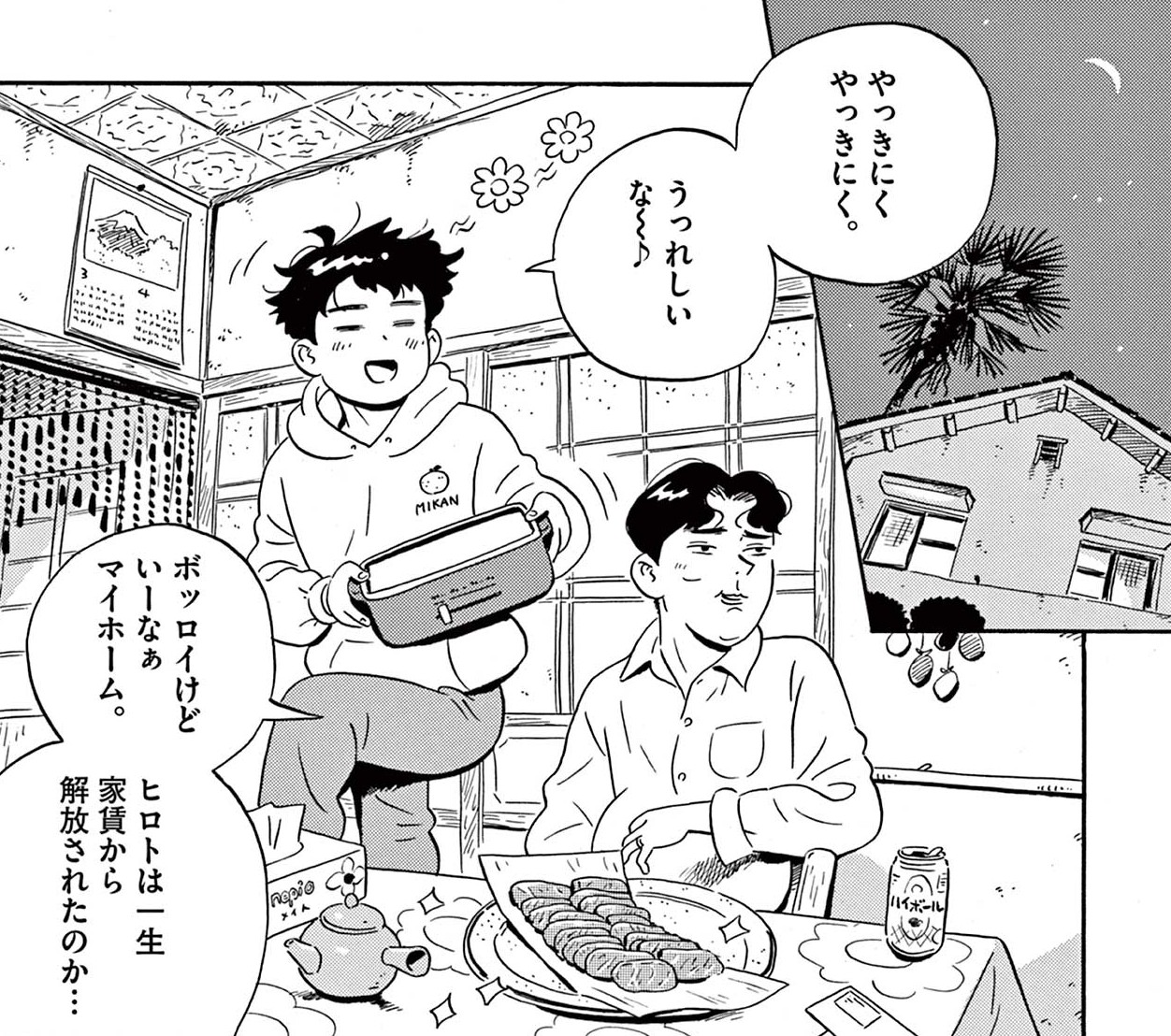
Hiroto’s friend Hideki stops by Hiroto’s workplace looking for a place to stay for the night. He has with him a shopping bag with beef.
- ヒロト:
- 「やっきにく やっきにく。うっれしいな〜♪」
- “Grilllled meat, grilllled. So happy~~♪”
- ヒデキ:
- 「ボッロイけどいーなぁマイホーム。」
- “It's a bit run down, but how nice, having your own home.”
- 「ヒロトは一生家賃から解放されたのか…」
- “Have you been freed from rent forever...?”
- Literal: “So Hiroto has been released from rent for life...”
解放 conveys the freedom from the constraints of having to pay rent.
Key Points
1解放 = “released from”
- In this scene, 解放された means Hiroto has been freed from the burden of paying rent.
- 解放 often implies release from some restriction, pressure, or obligation, not just simple physical “letting out”.
2一生家賃 = “rent for life”
- Here 一生 modifies the whole rent situation, giving the idea “for the rest of his life” or “forever”.
- Hideki is speaking to the idea that Hiroto might never have to pay rent again.
Vocabulary
一生 (Lifetime)
一生 means a lifetime or one’s whole life.
家賃 (Rent)
家賃 means the rent paid for a house or apartment.
解放 (Liberation)
解放 means release or liberation from confinement, restriction, oppression, or another burden.
See Also
- Kanji: Separating and understanding with 解
- Future entry: Past tense with 〜た・〜だ
- Grammar: Marking the topic with は and も
- Kanji: Releasing and sending out with 放
ひらやすみ © its respective creators. It is used here for educational commentary.