Limited edition with 限定
Kanji Explanation: Boundaries and limits with 限
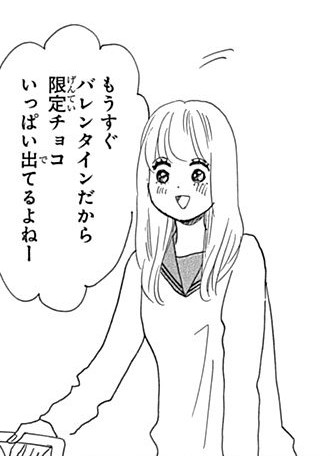
Takeo and Rinko meet up after school and stop somewhere for a drink and to chat. Rinko brings up February 14th, which is right around the corner.
- 凛子:
- 「もうすぐバレンタインだから限定チョコいっぱい出てるよねー」
- “Since it's almost Valentine's, a lot of limited edition chocolates have come out.”
- Literal: “Because Valentine's is soon, lots of limited chocolates are out, right?”
Key Points
1限定 = “limited / limited edition”
- 限定 means “limited” or “restricted”, and is commonly used to describe limited edition products.
- Frequently appears in commercial contexts for seasonal, special, or exclusive items.
- Pattern: 限定 + noun is “limited [noun]” (e.g., 限定版 = “limited edition”, 限定商品 = “limited product”).
2Casual particle omission: チョコ(が)いっぱい
- The subject marker が is omitted in casual speech.
- Full form: 限定チョコがいっぱい出てる “A lot of limited edition chocolates are coming out”.
3Sentence ending よねー for casual confirmation
- よね seeks agreement or confirmation from the listener.
- The elongated ねー adds a relaxed, conversational tone typical of friendly chat.
Vocabulary
限定 (Limitation)
限定 means limiting something to a particular scope, quantity, group, or condition.
出る (To go out)
出る means to go out or leave. It is also used when something appears or is produced.
See Also
- Kanji: Boundaries and limits with 限
- Future entry: Because with 〜から
- Grammar: Marking the subject with が
- Future entry: Seeking agreement with ね
- Kanji: Settling and deciding with 定
俺物語!! © its respective creators. It is used here for educational commentary.