Made your daughter cry with 泣かせた
Grammar Explanation: Making and letting with 〜せる・〜させる
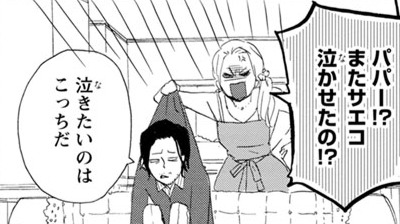
Saeko is invited to a Christmas party by the boy she likes, but her father forbids her from going.
- ママ:
- 「パパー!? またサエコ泣かせたの!?」
- “Dad!? Did you make Saeko cry again!?”
- パパ:
- 「泣きたいのはこっちだ」
- “I'm the one who feels like crying.”
Key Points
1泣かせた means made someone cry
- 泣く becomes the causative 泣かせる, then the past form 泣かせた.
- Here the causative describes causing an emotional reaction. It does not suggest that Dad ordered her to cry.
2サエコ has an omitted を
- The fuller phrase is サエコを泣かせた. Saeko is the person who cries, and Dad is the person Mom holds responsible.
- また means “again”, so Mom treats this as something Dad has done before.
3The final の asks Dad to explain
- 泣かせたの!? is a casual explanatory question. Mom is asking Dad to account for Saeko’s tears, with surprise and accusation in her tone.
4泣きたいのはこっちだ puts the focus on Dad
- 泣きたい combines the verb stem 泣き with たい. Here it means “feel like crying”.
- The の in 泣きたいのは turns the phrase into a noun phrase, “the one who feels like crying”, which allows は to set it as the topic. This の has a different role from Mom’s sentence-ending の.
- こっち literally refers to “this side”, but Dad uses it for himself. He insists that he is the one who feels like crying.
See Also
- Grammar: Making and letting with 〜せる・〜させる
- Grammar: Wanting to do with 〜たい
- Grammar: Reasoning with 〜のだ
夢みる太陽 © its respective creators. It is used here for educational commentary.