Making Nako cry over onions with 玉ねぎを切る
Vocabulary Explanation: Collocations for cooking
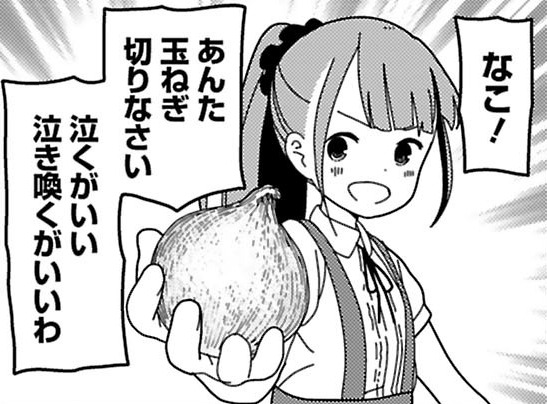
Bocchi, Aru, and Nako are spending the night at Sotoka’s apartment. When the group came up one futon short, Nako told Aru to go home, and Aru refused. Now Sotoka has suggested they start making dinner.
- アル:
- 「なこ!」
- “Nako!”
- 「あんた玉ねぎ切りなさい」
- “You cut the onions.”
- 「泣くがいい 泣き喚くがいいわ」
- “Go ahead and cry. Cry and wail all you like!”
Key Points
- 切る is the general verb for cutting food, and 玉ねぎを切る is the everyday way to say you’ll cut up the onions. Aru drops the を, as casual speech often does.
- Verb stem + なさい gives an order: 切り + なさい. Parents and teachers use it on children. Between classmates it sounds bossy, which suits Aru taking charge of Nako.
- あんた is a blunt, casual “you”. It fits Aru’s mood toward Nako.
- Dictionary form + がいい tells someone to go ahead and do something, usually with a gloating, villain-like edge: 泣くがいい, “go ahead and cry”.
- 泣き喚く raises the stakes: crying out loud and wailing. The sentence-final わ adds a haughty, feminine flourish.
Vocabulary
あんた (You)
あんた is a casual, blunt word for “you”. Between close people it sounds familiar, but toward others it can sound rude.
玉ねぎ (Onion)
玉ねぎ is the round bulb onion used in cooking. Cutting one is known for making your eyes water.
切る (To cut)
切る is to cut something. It also means to end a phone call or turn something off.
泣く (To cry)
泣く is to cry or weep.
いい (Good)
いい describes something good, nice, or fine. It can also mean “okay” or “that’s enough”. Its other forms come from よい, as in よくない and よかった.
泣き喚く (To cry and wail)
泣き喚く is to cry loudly and wail, often while shouting or screaming, like a child in a tantrum.
See Also
- Vocabulary: Collocations for cooking
- Grammar: The plain imperative