Might have similar tastes with 〜かもしれない
Grammar Explanation: Might with 〜かもしれない
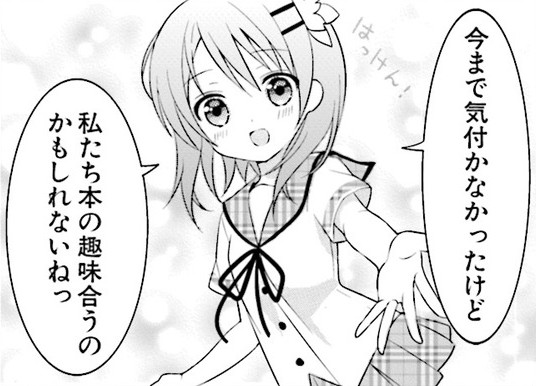
At the library, Cocoa thinks she’s realized which book Chino is trying to find but forgot the title of.
- ココア:
- 「今まで気付かなかったけど」
- “I didn't notice until now, but...”
- 「私たち本の趣味合うのかもしれないねっ」
- “...maybe we have similar taste in books.”
- Literal: “Our taste in books might match.”
Key Points
1かもしれない leaves Cocoa’s discovery tentative
- Cocoa treats one shared book interest as evidence that their tastes may match, not as proof of complete agreement.
2本の趣味が合う means sharing taste in books
- The particle が is omitted before 合う in the dialogue.
3の and ね make the thought conversational
- の gives the statement an explanatory tone, and ねっ invites Chino to share Cocoa’s pleased realization.
Vocabulary
| Word | English | Meaning |
|---|---|---|
| 今まで | Until now | 今まで means up to the present. |
| 気付く | To notice | 気付く is to become aware of something. It is also written 気づく. |
| 私 | I | 私 means “I” or “me”. It is the standard first-person pronoun in polite speech and is also common in casual speech among women. |
| 本 | Book | 本 is a book. |
| 趣味 | Hobby | 趣味 means a hobby pursued for enjoyment. It can also mean personal taste or preference. |
| 合う | To fit | 合う is to fit or match something, or to suit someone. It also means for things to agree, like answers or tastes. |
See Also
- Grammar: Might with 〜かもしれない
- Grammar: Past tense with 〜た・〜だ
- Grammar: Until an action occurs with 〜まで
- Grammar: Negation with 〜ない
- Grammar: Compound voicing with 連濁
- Grammar: But with 〜けど and 〜けれど
- Kanji: Joining and fitting with 合
- Kanji: Now and the present with 今
- Kanji: Origins and main things with 本
- Kanji: Privacy and self with 私
- Kanji: Taste and meaning with 味
ご注文はうさぎですか? © its respective creators. It is used here for educational commentary.