Misseeing something as a ghost as the park lake with 〜ちゃう
Grammar Explanation: Doing completely or ending up doing with 〜てしまう and 〜ちゃう
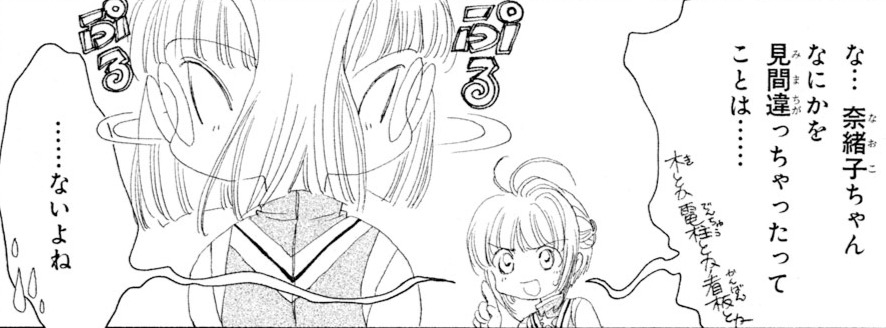
After piano class, Naoko hurries home only to see a ghostly figure appear from within a lake at the park. She recalls the events to her friends at school.
- 桜:
- 「な…奈緒子ちゃん なにかを見間違っちゃったってことは…… (木とか電柱とか看板とか)」
- “Na... Naoko, could it be that you ended up seeing something wrong...... (like a tree or a utility pole sign or something)?”
- Literal: “Na... Naoko-chan, could it be that you ended up mistaking something you saw... like a tree or a utility pole or a sign?”
- 「……ないよね」
- “......I guess not.”
Key Points
1見間違っちゃった = ended up seeing it wrong
- 見間違う means to mistake what you see, so Sakura is suggesting Naoko may have misidentified an ordinary object as the ghostly figure.
- ちゃった is the casual spoken form of てしまった, adding the sense that this happened unintentionally or unfortunately.
- The full shape is 見間違ってしまった -> 見間違っちゃった.
2なにかを marks the mistaken object
- なにかを means “something” as the thing Naoko may have seen incorrectly.
3ってことは……ないよね softens a doubtful guess
- ってことは frames Sakura’s idea as “does that mean…” or “could it be that…” before she trails off.
- ……ないよね backs away from the suggestion, as Naoko is confident that is not the case.
- ちゃん is an affectionate, informal suffix attached to names, used mainly for children, close friends, and family members.
Vocabulary
電柱 (Utility pole)
電柱 means a utility pole that supports overhead electrical and communication lines.
看板 (Signboard)
看板 means a signboard used to identify or advertise a shop, product, or event.
See Also
カードキャプターさくら © its respective creators. It is used here for educational commentary.