Naming a reason for going to cafés with 理由を挙げる
Vocabulary Explanation: Raising, frying, and holding with あげる
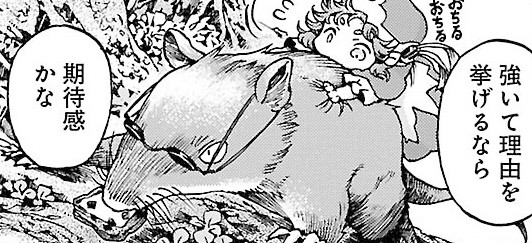
Two rats offered Hakumei and Mikochi a ride to a café, but they lost the way and got too hungry to keep climbing, so Mikochi shares the sandwiches she packed. One rat asks why Mikochi goes to cafés when she can make food herself. Mikochi first answers that coffee isn’t her specialty.
- ミコチ:
- 「強いて理由を挙げるなら」
- “If I had to give a reason...”
- 「期待感かな」
- “I guess it's the anticipation.”
Key Points
- 挙げる here is putting something forward for others to see, the 挙 of 例を挙げる, “give an example”. The 2014 government spelling guide describes this 挙 as “show clearly”.
- 強いて comes from 強いる, “force”, and means doing something even though it’s a stretch. 強いて〜なら is “if I had to”, and it warns that the answer isn’t a strong one.
- 強 is read し here, not つよ.
- A verb before なら sets up a situation, “if I were to”. 挙げるなら is “if I were to name one”.
- 〜感 turns a noun into “a sense of”, so 期待感 is “a feeling of anticipation”. かな makes the answer tentative, “I guess”.
Vocabulary
| Word | English | Meaning |
|---|---|---|
| 強いて | If pressed; if I had to | 強いて means doing something even though it takes some forcing. 強いて〜なら is “if I had to”, used when the speaker has no strong answer but offers one anyway. |
| 理由 | Reason | 理由 is why something is so or was done. 理由がある is to have a reason, and 理由もなく is for no reason. |
| 挙げる | To raise; to give (an example); to hold (a ceremony) | 挙げる is putting something up or forward where others can see it. It covers raising a hand, giving an example or a reason, as in 例を挙げる, and holding a ceremony, as in 結婚式を挙げる. |
| 期待感 | Sense of anticipation | 期待感 is a feeling of anticipation, the sense that something good might happen. |
See Also
- Vocabulary: Raising, frying, and holding with あげる
- Grammar: Wondering with かな
- Grammar: If that's the case with なら
- Kanji: Strength and force with 強