Never mind that, what about the exam with いいから
Vocabulary Explanation: Don't worry about it with いいから
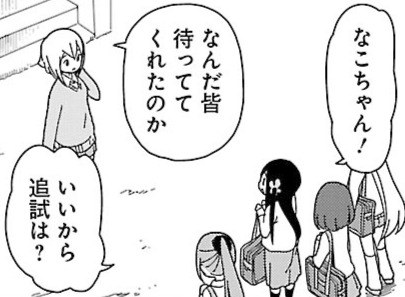
After failing an exam, Nako has to take a make-up exam. Bocchi provides her notes to help Nako learn the material better. After the test, Nako finds Bocchi and their friends waiting for her.
- ぼっち:
- 「なこちゃん!」
- “Nako-chan!”
- なこ:
- 「なんだ皆 待っててくれたのか」
- “Hey everyone. You've been waiting for me?”
- アル:
- 「いいから追試は?」
- “Never mind that, how'd the make-up exam go?”
- Literal: “That's fine, so what about the make-up exam?”
Key Points
1いいから = never mind that
- Here, Aru dismisses Nako’s surprise about everyone waiting and jumps straight to the exam result.
- This is a common conversational use of いいから, not the literal meaning “because it’s good”.
2Abrupt omitted middle: いいから 追試は?
- The fuller idea is something like “そんなことはいいから、追試はどうだった?”
- Japanese often leaves out the predictable middle when the speaker wants to move the conversation along quickly.
3追試 = “make-up exam”
- 追試 is an extra exam taken after failing or missing the original one.
4Topic-marking は with the rest omitted
- In “追試は?”, は sets up “the make-up exam” as the topic, while the actual question is left unsaid.
- The meaning is “What about the make-up exam?” or “How did the make-up exam go?”
- ちゃん is an affectionate, informal suffix attached to names, used mainly for children, close friends, and family members.
Vocabulary
追試 (Retest)
追試, short for 追試験, is a make-up exam given to students who missed the original.
See Also
- Vocabulary: Don't worry about it with いいから
- Future entry: Past tense with 〜た・〜だ
- Grammar: Receiving kindness with 〜てくれる
- Grammar: Marking the topic with は and も
- Kanji: Testing and trying with 試
ひとりぼっちの○○生活 © its respective creators. It is used here for educational commentary.