Never seen a panda with 見たことない
Grammar Explanation: Previous experience with 〜た+ことがある
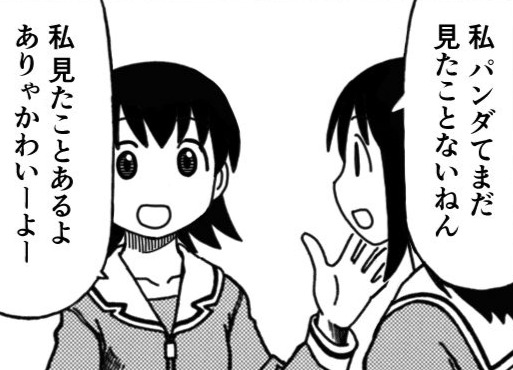
Chiyo shows her friends in class the panda picture book she bought.
- 歩:
- 「私 パンダてまだ見たことないねん」
- “I haven't seen a panda yet.”
- とも:
- 「私 見たことあるよ ありゃかわいーよー」
- “I've seen one. They're cute!”
Key Points
1見たことない and 見たことある give opposite answers
- Ayumu’s 見たことない says that she has never seen a panda. Tomo answers with the affirmative 見たことある, “I’ve seen one.”
- Both speakers omit が from the fuller forms 見たことがない and 見たことがある.
2まだ with a negative means “not yet”
- With a negative, まだ covers the period up to now. Ayumu has not seen a panda yet, though she may later.
3ねん gives Ayumu’s line a Kansai ending
- 見たことないねん roughly corresponds to standard Japanese 見たことないんだ.
- Here ねん makes the line explanatory and a little insistent as Ayumu tells the others about herself.
4ありゃ contracts あれは
- ありゃ points back to the panda. The uncontracted phrase is あれは, “as for that.”
- かわいー is a stretched, conversational pronunciation of かわいい.
Vocabulary
私 (I)
私 means “I” or “me”. It is the standard first-person pronoun in polite speech and is also common in casual speech among women.
見る (To see)
見る means to see or look at something. It can also mean to examine its condition or nature.
See Also
- Grammar: Previous experience with 〜た+ことがある
- Future entry: Past tense with 〜た・〜だ
- Grammar: Grammar in the Kansai dialect
- Future entry: Informing with よ
- Grammar: Marking the topic with は and も
- Kanji: Privacy and self with 私
あずまんが大王 © its respective creators. It is used here for educational commentary.