No one in a ruin like this with 〜わけない
Grammar Explanation: No way with 〜わけがない
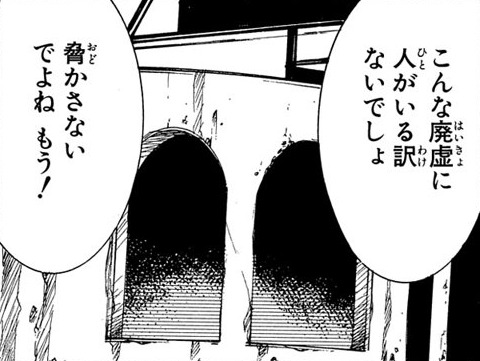
While chasing President Aria in a training gondola, Akari and Aika follow a narrow canal and come out among the ruins of an old settlement from the days when Aqua was still called Mars. Akari glances up at a pair of empty windows and says she felt as if someone was watching them.
- 藍華:
- 「こんな廃虚に人がいる訳ないでしょ」
- “There's no way anyone's in a ruin like this.”
- 「脅かさないでよね もう!」
- “Don't scare me like that, geez!”
Key Points
- 〜わけがない follows a verb’s plain form and rules something out completely. Aika drops the が, as casual speech usually does, and writes わけ in kanji as 訳.
- 人がいる is “a person is there”. いる is used for people and animals.
- こんな廃虚に sets the place with に. こんな, “this kind of”, adds that a place like this is the last spot anyone would be.
- でしょ is the clipped form of でしょう. After 訳ない, it’s not a guess. It tells Akari the answer is obvious: “of course nobody’s here”.
- 脅かす means “to scare” or “to startle”. 〜ないで is a casual negative request: “don’t”.
- よね presses the request on Akari, and もう! shows Aika’s exasperation. Her protest hints that Akari’s remark did unsettle her.
Vocabulary
こんな (Like this)
こんな describes something like the thing in front of the speaker or the thing just mentioned.
廃虚 (Ruins)
廃虚 is the ruins of a building or town that has been abandoned or destroyed. It’s another spelling of 廃墟, with the common-use kanji 虚 in place of 墟.
人 (Person)
人 is a person, or people in general. It also means other people.
いる (To be)
いる is to exist or be somewhere, for people and animals. After a て-form verb, it shows an ongoing action or a continuing state.
訳 (Reason)
訳 is a reason, meaning, or circumstance. It’s the kanji spelling of わけ and appears in the same grammar patterns, such as 訳じゃない, “it’s not that…”.
脅かす (To scare)
脅かす means to scare or startle someone, often on purpose or as a joke. Read おびやかす, it means to threaten or endanger something, such as someone’s safety or position.
もう (Already)
もう means something has already happened, or with a negative, “no longer”. Before a number, it means “more”. Said alone, it shows frustration.
See Also
- Grammar: No way with 〜わけがない
- Grammar: Presuming with 〜だろう and 〜でしょう
- Grammar: Informing with よ
- Kanji: People and persons with 人