Not only physical wounds with 〜だけじゃなくても
Grammar Explanation: Not limited to just this with 〜だけじゃなくても
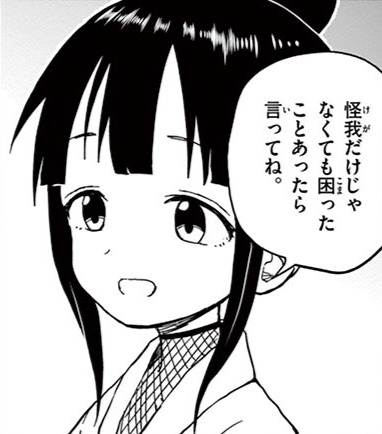
During lunch, Mokurin sees someone new sitting with Tsubaki. She learns that it’s the transfer student, Rindou, who’s joined Tsubaki in the Dog Clan. Mokurin introduces herself as a member of the Monkey Clan, which Tsubaki explains handles medical treatment.
- モクリン:
- 「怪我だけじゃなくても困ったことあったら言ってね。」
- “If you're having trouble with anything, not just injuries, let me know.”
- Literal: “Even if it is not only injuries, if there is something troubling you, tell me.”
Key Points
1怪我だけじゃなくても broadens the offer
- 怪我 is the obvious medical category Mokurin starts from, but she does not limit her help to injuries.
- The pattern だけじゃなくても reads here as “not just injuries” or “even if it is not an injury”.
2じゃなくても is casual and concessive
- じゃなくて is the conversational form of ではなくて, meaning “not” or “not being”.
- The added も gives the concessive feel of “even if it is not…” rather than simply listing a second item.
3Omitted が after こと
- 困ったことあったら is short for 困ったことがあったら.
- 困ったこと means “something troubling” or “a problem”; あったら sets the condition, “if there is” or “if you have”.
4言ってね keeps the line friendly
- 言って here means “tell me” or “say something to me”.
- The sentence-ending ね softens the request, so Mokurin sounds like she is offering help rather than giving an order.
Vocabulary
怪我 (Injury)
怪我 means an injury or wound. Figuratively, it can mean an unexpected mistake or loss.
言う (To say)
言う means to say or tell. It can also mean to call something by a particular name.
See Also
- Grammar: Not limited to just this with 〜だけじゃなくても
- Grammar: Previous experience with 〜た+ことがある
- Kanji: Strange things and monsters with 怪
くノ一ツバキの胸の内 © its respective creators. It is used here for educational commentary.