Not quite a movie buff with ってほどでもない
Grammar Explanation: Not as much as with 〜ほど〜ない
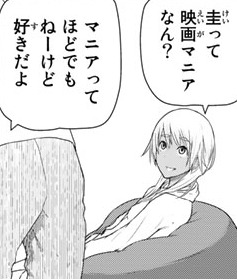
Kei’s cousin Akane is at his house, and the two of them have been watching a movie together. The film has just ended.
- 茜:
- 「圭って映画マニアなん?」
- “Kei, are you a movie buff?”
- 圭:
- 「マニアってほどでもねーけど好きだよ」
- “I wouldn't go as far as "buff", but I like them.”
Key Points
1マニアってほどでもねー = “I wouldn’t go as far as ‘buff’”
- Noun + ってほどじゃない says a label is too strong. って quotes マニア, and ほど with a negative says Kei doesn’t reach that label.
- ってほど is the casual form of というほど, “to the point of being called”. The full version is マニアというほどでもない.
- Kei doesn’t deny liking movies. He only rejects マニア as too strong a word for it.
2でもない instead of じゃない
- ほどじゃない and ほどでもない both work here. も adds “not even”, so ほどでもない sounds a little more offhand: “it’s not even at that level”.
- Kei sounds casual and a little modest about how much he watches.
3Rough casual ねー for ない
- ねー (also written ねえ) is a rough, casual way to say ない. Here でもねー stands for でもない.
- This sound change is common in casual male speech. It isn’t the sentence-ending particle ね.
4Hedging with けど
- けど means “but”. After a denial, it sets up what the speaker will say. Kei rejects the label first, then admits 好きだよ, “I do like them”.
- よ gives Akane this as new information about him.
5Akane’s question with って and なん
- 圭って is a casual way to bring up a topic, much like 圭は: “Kei, are you…”
- なん? is a casual なの?. It turns 映画マニア, “movie buff”, into a yes-or-no question.
- マニア comes from English “mania”, but in Japanese it means an enthusiast or buff, someone deeply into a hobby.
Vocabulary
映画 (Film)
映画 is a movie, a story told in moving pictures shown on a screen.
マニア (Enthusiast)
マニア is a person who is deeply into a hobby or field, such as a movie buff or a train enthusiast. It comes from English “mania”.
ほど (Extent)
ほど is the degree or extent of something: “about” or “as much as”. 〜ば〜ほど means “the more…, the more…”.
好き (Liked)
好き describes something you like or someone you love.
See Also
- Grammar: Not as much as with 〜ほど〜ない
- Grammar: How casual contractions work
- Grammar: But with 〜けど and 〜けれど
- Grammar: Quoting and reporting with と and って
- Grammar: Reasoning with 〜のだ
- Kanji: Pictures and plans with 画
ふらいんぐうぃっち © its respective creators. It is used here for educational commentary.