Not seeing the fabric shop with 〜っぽい
Grammar Explanation: Kind of like with 〜っぽい
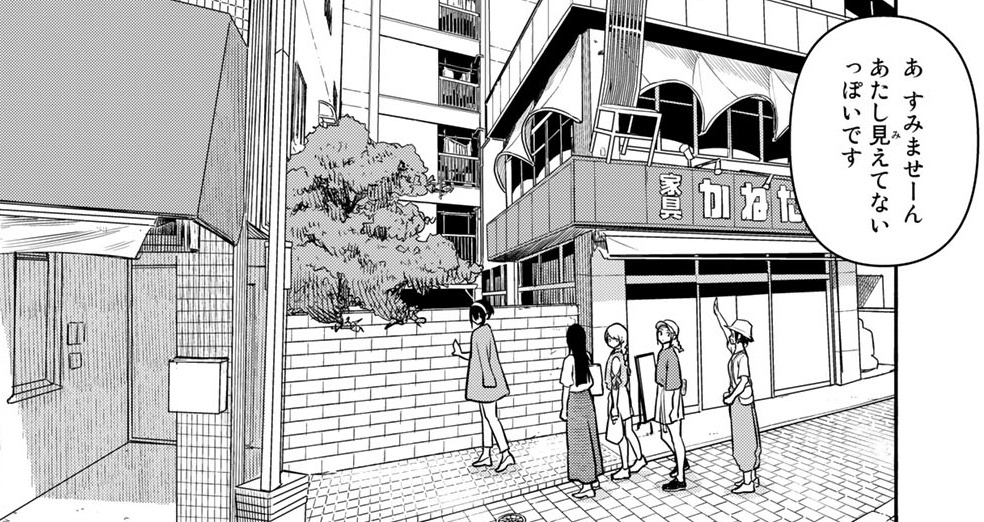
Tomoe Nibe, a witch who works with clothes, has brought Makoto and her friends to the fabric shop she runs in Sugamo. She tells them they’ve arrived and that the shop carries fabric from all over the world.
- 弥生:
- 「あ すみませーん あたし見えてないっぽいです」
- “Um, excuse me! Looks like I can't see it.”
Key Points
1A guess with clause + っぽい
- 見えてない is a whole clause in its plain negative form. っぽい after it makes a guess, “it seems that” or “looks like”, much as みたい would.
- The negative ない sits inside the clause, before っぽい. That’s how you can tell this guess apart from words like 子供っぽい, where っぽい makes a new adjective.
- The guess is a hedge. Yayoi is still working out that the problem is on her side.
2Adding です
- The clause + っぽい guess is very casual, but Yayoi adds です to sound polite to Nibe. っぽいです turns up in casual polite speech like this, while formal speech would use ようです.
3見えてない, “can’t see it”
- 見える means “to be visible” or “can see”. It describes what reaches your eyes, not a deliberate act of looking.
- 〜てない is the casual contraction of 〜ていない. 見えていない describes the current state: the shop isn’t showing up for her right now.
4Getting attention with すみません
- すみません here means “excuse me”. With the raised hand and the stretched すみませーん, she calls out to Nibe, who is walking ahead.
Vocabulary
すみません (Excuse me)
すみません is a polite “excuse me” or “I’m sorry”. People also use it to get someone’s attention, as when calling over a shop clerk, and sometimes to say thank you.
あたし (I)
あたし means “I” or “me”. It is a casual, feminine form of 私.
見える (To be visible)
見える is for something to be seen. It also means to seem or look a certain way.
っぽい (-ish)
っぽい follows a word to say something seems like it or tends toward it.
See Also
- Grammar: Kind of like with 〜っぽい
- Grammar: How casual contractions work
- Grammar: Polite style with です and ます
- Kanji: Seeing and viewpoints with 見
ふらいんぐうぃっち © its respective creators. It is used here for educational commentary.