Not thinking that far with 〜ってば
Grammar Explanation: Insisting with 〜ってば
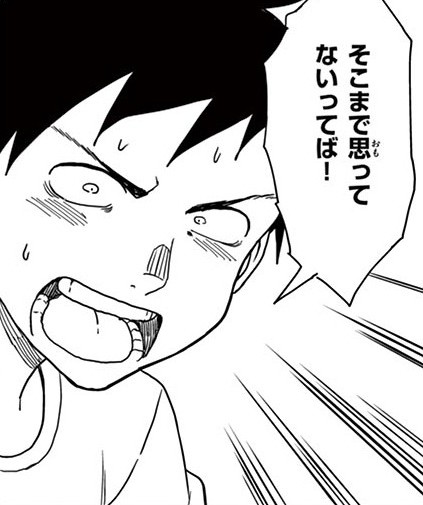
Nishikata and Takagi watch their daughter Chii play in the typhoon wind, pretending she’s the one making it blow. Takagi says it really looks like Chii is stirring up the wind. Nishikata nearly agrees, then catches himself. Takagi then puts his thoughts into words for him, guessing that he wonders whether this is a power only children have, and whether Chii has it because she’s his own child.
- 西片:
- 「そこまで思ってないってば!」
- “I'm telling you, I don't think it goes that far!”
- Literal: “I'm not thinking that far, I tell you!”
Key Points
1Pushing back with ってば
- Sentence-final ってば presses a point the listener isn’t taking in. Takagi is cheerfully telling Nishikata what he thinks, so he pushes back hard.
- It follows the plain negative 思ってない directly, the same way it follows any plain sentence.
2そこまで, “that far”
- そこまで means “to that extent” or “that far”. Here it points back at Takagi’s last guesses, a power only children have and one Chii got from him.
- Because of そこまで, Nishikata denies only how far her guess goes. He doesn’t say he thought nothing of the kind.
3思ってない from 思っていない
- 思っている describes thinking something as an ongoing state. Its negative is 思っていない, “am not thinking”.
- Casual speech drops the い of ている, giving 思ってない.
Vocabulary
そこまで (That far)
そこまで means “that far” or “to that extent”, pointing back to a place, a point, or a degree just mentioned. そこまでしなくても is “you don’t have to go that far.”
思う (Think)
思う is to have a thought, feeling, belief, or hope about something.
See Also
- Grammar: Insisting with 〜ってば
- Grammar: How casual contractions work
- Grammar: Ongoing actions and resulting states with 〜ている
からかい上手の(元)高木さん © its respective creators. It is used here for educational commentary.