Patrols in the market with 見廻り
Kanji Explanation: Circling and cycles with 廻
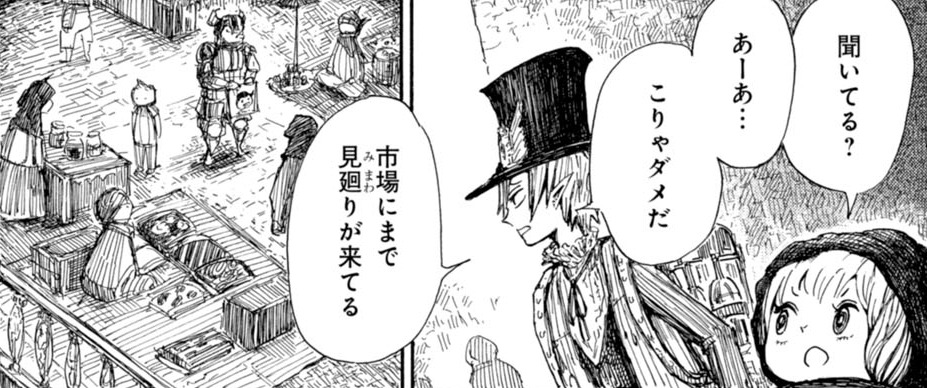
Nicola and Simon have just arrived in a city in the demon world. When Nicola wonders aloud whether a street snack is safe for humans to eat, a guard overhears, accuses her of being human, and the two of them barely outrun the guards. Now Nicola wants to leave the city right away.
- ニコラ:
- 「聞いてる?」
- “Are you listening?”
- サイモン:
- 「あーあ…」
- “Aw, man...”
- 「こりゃダメだ」
- “This is no good.”
- 「市場にまで見廻りが来てる」
- “The patrols have made it all the way to the market.”
Key Points
- 見廻り is going around a place to check on it. It combines 見る, to look, with 廻り, going around. Here it names the guards making the rounds, so 見廻りが来てる means “the patrol has come”.
- Modern writing usually spells it 見回り. Both spellings read the same.
- に marks the market as the place the patrol has come to. まで adds “even”: the guards have spread to a place Simon didn’t expect them.
- 来てる is the casual form of 来ている. With a verb of movement like 来る, 〜ている says the arrival has happened and the result still holds. The patrol has come and is there now.
- Nicola’s 聞いてる? uses the same contraction with its ongoing-action meaning: “Are you listening?”
- こりゃ is a casual contraction of これは. ダメ means hopeless or not allowed, so Simon is saying their situation is no good.
- あーあ is a sigh of disappointment, like “Aw, man.”
Vocabulary
| Word | English | Meaning |
|---|---|---|
| 聞く | To hear | 聞く is to hear or listen to something. It also means to ask a question. |
| ダメ | No good | ダメ is a katakana spelling of だめ, describing something that is useless or not allowed. |
| 市場 | Market | 市場 is a marketplace where stalls or shops sell food and goods. Read しじょう, it means a market in the economic sense, such as the stock market. |
| 見廻り | Patrol | 見廻り is making the rounds to check that everything is in order, as a guard, teacher, or Edo-period watchman does. It also names the person on patrol. It is usually written 見回り today. |
| 来る | To come | 来る means to come or move toward the speaker or the place being discussed. |
See Also
- Kanji: Circling and cycles with 廻
- Grammar: Ongoing actions and resulting states with 〜ている
- Grammar: How casual contractions work
- Grammar: Until an action occurs with 〜まで
- Kanji: Seeing and viewpoints with 見