Place of lodging with 〜先
Vocabulary Explanation: Place where something is done with 〜先
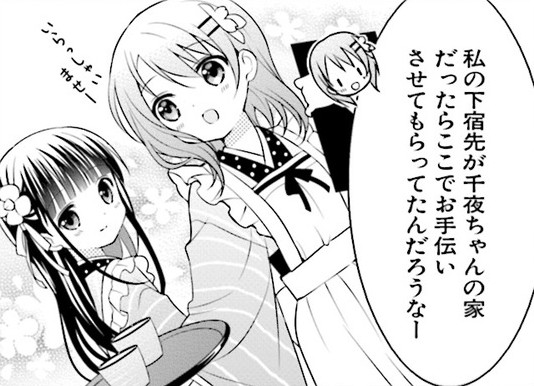
Since Cocoa helps out at Chino’s house where she’s staying, she considers the situation if she were instead staying with Chiya.
- ココア:
- 「私の下宿先が千夜ちゃんの家 だったらここでお手伝い させてもらってたんだろうなー」
- “If my lodging place were Chiya-chan's house, I probably would've been allowed to help out here.”
Key Points
1下宿先 means the place where someone lodges
- 〜先 names the place associated with the action, so Cocoa refers to her lodging destination.
2だったら sets an imagined condition
- Cocoa imagines the counterfactual case “if my lodging place were Chiya’s house”.
3させてもらってたんだろう expresses a probable permitted action
- Cocoa supposes she would have received permission to help at the shop, and だろうなー marks her reflection about that unreal situation.
- ちゃん is an affectionate, informal suffix attached to names, used mainly for children, close friends, and family members.
Vocabulary
| Word | English | Meaning |
|---|---|---|
| 私 | I | 私 means “I” or “me”. It is the standard first-person pronoun in polite speech and is also common in casual speech among women. |
| 下宿先 | Lodging | 下宿先 is the home where someone boards, paying for a room, and often meals, in another person’s house. |
| 家 | House | 家 is a building where people live. |
| ここ | Here | ここ is the place where the speaker is. |
| お手伝い | Help | お手伝い is helping someone with their work or chores. お手伝いさん also means a housekeeper. |
| させる | To make someone do | させる is the causative form of する. It means to make someone do something or to let them do it. |
See Also
- Vocabulary: Place where something is done with 〜先
- Grammar: Presuming with 〜だろう and 〜でしょう
- Grammar: Having someone do something with 〜てもらう
- Kanji: Below and lowering with 下
- Kanji: Hands and skill with 手
- Kanji: Homes and specialists with 家
- Kanji: Privacy and self with 私
ご注文はうさぎですか? © its respective creators. It is used here for educational commentary.