Please let me help you with 〜させてください
Grammar Explanation: Please let me with 〜させてください
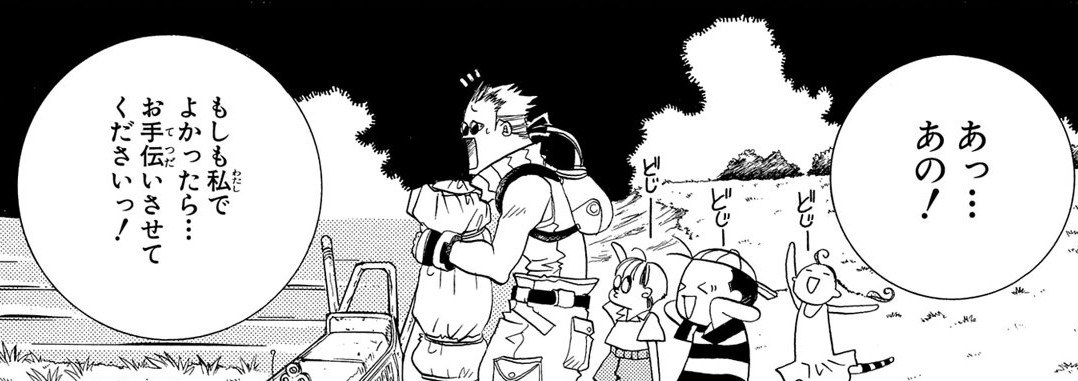
Akari meets Woody as he’s out on a delivery run. He’s in a spot of trouble because he’s lost his map, and there isn’t enough time for him to go back and get it. Akari is familiar with the city and realizes she can lend him her knowledge.
- 灯里:
- 「あっ… あの!」
- “Ah, um!”
- 「もしも私でよかったら… お手伝いさせてくださいっ!」
- “If I would be okay... Please let me help you!”
- Literal: “If I would be okay... please let me help!”
Key Points
1〜させてください politely asks to be allowed to act
- お手伝いさせてください means “please let me help”.
2お手伝いする is the base expression
- The noun お手伝い plus する forms the verb “to help”.
- That する becomes the causative させる, giving させてください.
3もしも私でよかったら softens the offer
- もしも 私でよかったら means “if I would be okay” or more naturally “if you’d be alright with me helping”.
- Akari presents herself modestly before making the request.
Vocabulary
| Word | English | Meaning |
|---|---|---|
| あの | That | あの comes before a noun to mean “that” or “those”. It points to someone or something away from both speakers, or something they both know about. |
| もしも | If | もしも is an emphatic もし, often for unlikely or imagined situations. |
| 私 | I | 私 means “I” or “me”. It is the standard first-person pronoun in polite speech and is also common in casual speech among women. |
| お手伝い | Help | お手伝い is helping someone with their work or chores. お手伝いさん also means a housekeeper. |
See Also
- Grammar: Please let me with 〜させてください
- Kanji: Hands and skill with 手
- Kanji: Privacy and self with 私
ARIA The MASTERPIECE © its respective creators. It is used here for educational commentary.