Preparing by memorizing with 〜ておく
Grammar Explanation: Doing in advance with 〜ておく
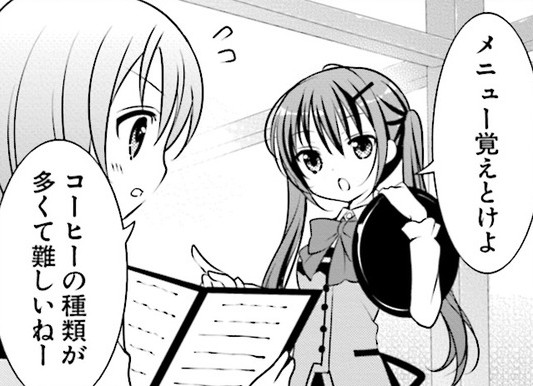
As the experienced barista, Rize is tasked with teaching Cocoa about working at the café.
- リゼ:
- 「メニュー覚えとけよ」
- “Memorize the menu ahead of time.”
- Literal: “Memorize the menu and keep it done.”
- ココア:
- 「コーヒーの種類が多くて難しいねー」
- “The different kinds of coffee are numerous and difficult, huh?”
Key Points
1覚えとけ = 覚えておけ
- The base idea is 覚えておく: memorize it now so it is already known later.
- In this scene, Rize is telling Cocoa to prepare by learning the menu before she needs it for work.
2Contraction chain: ておく to とく, then command とけ
- ておく often contracts in speech to とく.
- The command form changes おく to おけ.
3メニュー is the thing to memorize
- The object marker を is omitted after メニュー in casual speech.
- Full form: メニューを覚えておけよ “Memorize the menu ahead of time.”
4よ makes the command direct
- The bare command 覚えとけ is already firm and casual.
- The final よ presents it as an instruction Rize expects Cocoa to follow.
Vocabulary
| Word | English | Meaning |
|---|---|---|
| メニュー | Menu | メニュー is a menu at a restaurant or café, or a list of options. |
| 覚える | To remember | 覚える is to learn and keep something in memory. |
| コーヒー | Coffee | コーヒー is coffee, the drink made from roasted coffee beans. |
| 種類 | Type | 種類 is a group of things that share the same qualities: a type or kind. |
| 多い | Many | 多い describes a large number or amount. |
| 難しい | Difficult | 難しい describes something hard to do or understand. |
See Also
- Grammar: Doing in advance with 〜ておく
- Grammar: The plain imperative
- Grammar: How casual contractions work
ご注文はうさぎですか? © its respective creators. It is used here for educational commentary.