Raised in a snowy region with 雪国
Kanji Explanation: Countries and realms with 国
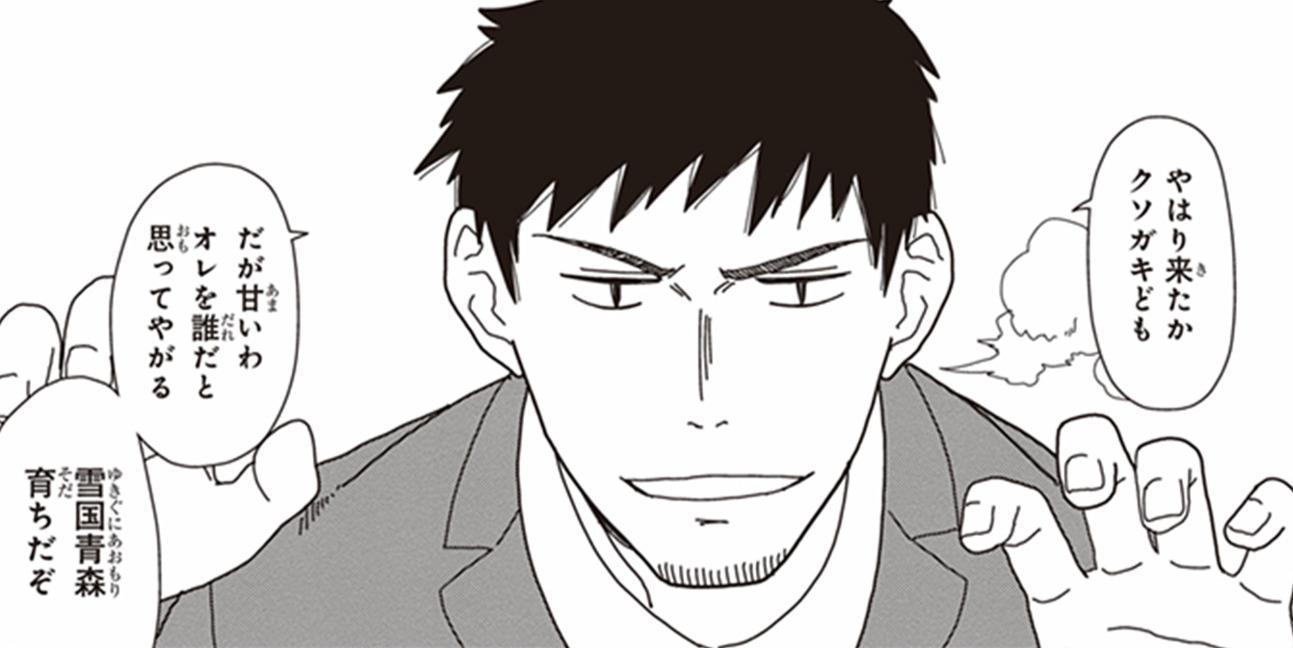
Sacchan, Yui, and Kotoha play in the snow in various ways. After running out of things to do, Sacchan comes up with an idea. They head over to Officer Saitou and greet him with snowballs in hand.
- 斎藤:
- 「やはり来たか クソガキども」
- “So you came after all, you little brats.”
- 「だが甘いわ オレを誰だと思ってやがる」
- “But you underestimate me! Just who do you think I am?”
- 「雪国青森育ちだぞ」
- “I grew up in Aomori, in snow country!”
Key Points
- Here 国 means a region. Saitou calls 青森 snow country to explain his confidence about facing the girls’ snowballs.
- A place name followed by 育ち describes where someone was raised. It does not necessarily tell you where they were born.
- The noun 育ち comes from 育つ, meaning to grow up. Adding だ makes the statement, and ぞ gives his boast a forceful ending.
- だが means but. 甘いわ pushes back against their confidence that they can get him with snowballs.
- やはり来たか shows that he expected them to come. クソガキども addresses the girls as little brats, with ども grouping them together contemptuously.
- The ending やがる in 思ってやがる adds hostility. The と before 思って marks what they supposedly think.
Vocabulary
やはり (As expected)
やはり shows that something turned out as the speaker thought, or that the speaker is coming back to an earlier choice. It is a more formal form of やっぱり.
来る (To come)
来る means to come or move toward the speaker or the place being discussed.
ガキども (Brats)
ガキども is a rough word for a group of children, like “you brats”.
甘い (Sweet)
甘い describes something with a sweet taste or smell. It also describes being too lenient or naive.
オレ (I)
オレ is a katakana spelling of おれ, a casual, masculine word for “I”. It is also written 俺.
誰 (Who)
誰 asks which person.
思う (Think)
思う is to have a thought, feeling, belief, or hope about something.
育つ (To grow up)
育つ is for a person, animal, or plant to grow up. 〜育ち means raised in a certain place.
See Also
- Kanji: Countries and realms with 国
- Grammar: Rough declarations with ぞ and ぜ
- Grammar: Quoting and reporting with と and って
- Grammar: The copula だ
- Grammar: Contrasting with 〜が〜
- Grammar: Compound voicing with 連濁