Reaching out before shopping with 〜ておく
Grammar Explanation: Doing in advance with 〜ておく
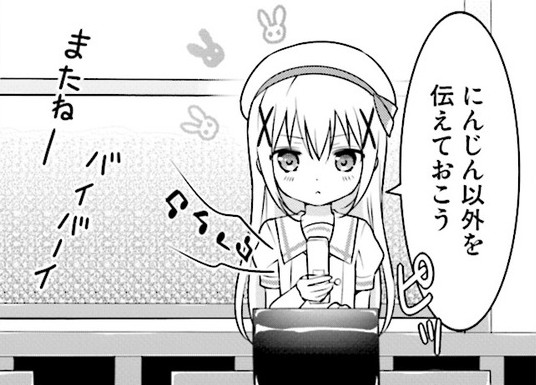
As Chino gathers her things after school, she recalled that Cocoa will be making stew for dinner.
- チノ:
- 「にんじん以外を伝えておこう」
- “I'll let her know in advance everything except carrots.”
- Literal: “I'll tell her everything except carrots and leave it done.”
- ◯:
- 「またねー」
- “See you!”
- ◯:
- 「バイバーイ」
- “Bye-bye!”
Key Points
1伝えておこう means deciding to tell her in advance
- Chino plans to send the ingredient information before Cocoa shops for the stew.
2おこう is the volitional form of おく
- The volitional ending presents Chino’s decision as “I’ll make sure to tell her.”
3にんじん以外 excludes carrots
- 以外 means “except for”, so Chino intends to mention every relevant ingredient other than carrots.
Vocabulary
| Word | English | Meaning |
|---|---|---|
| にんじん | Carrot | にんじん is a carrot, the orange root vegetable. It is also written 人参. |
| 以外 | Except | 以外 refers to everything other than what is named: “except” or “other than”. |
| 伝える | To tell | 伝える is to pass information on to someone, or to get a message across. |
| また | Again | また means “again” or “once more”. It also means “also”. As a goodbye, またね means “see you”. |
| バイバイ | Bye-bye | バイバイ is a casual goodbye, from the English “bye-bye”. |
See Also
- Grammar: Doing in advance with 〜ておく
- Grammar: Connecting actions with 〜て・〜で
- Grammar: Seeking agreement with ね
- Kanji: Limits and basis with 以
ご注文はうさぎですか? © its respective creators. It is used here for educational commentary.