Receiving a watching with 〜れる
Grammar Explanation: Receptive verbs with 〜れる
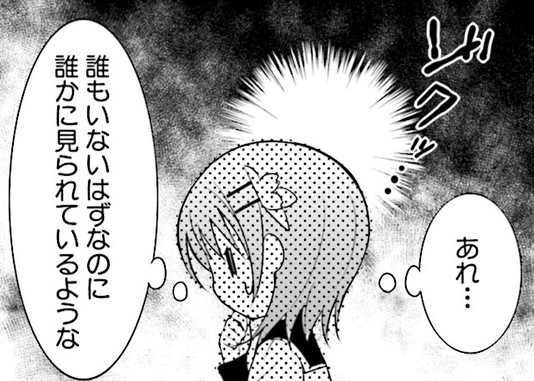
After Chino shows Cocoa to the changing room, Chino goes to get Cocoa’s uniform. Left alone, Cocoa gets a feeling otherwise.
- ココア:
- 「あれ… 誰もいないはずなのに誰かに見られているような」
- “Huh? Even though nobody should be here, it feels like I'm being watched by someone.”
- Literal: “Huh? Even though nobody should be here, it's like I'm being seen by someone.”
Key Points
1見られている means Cocoa is being watched
- 見る becomes 見られる in the receptive, so Cocoa is not doing the watching. She is receiving someone else’s gaze.
- 〜ている makes the watching feel ongoing in this moment.
2誰かに marks the watcher
- In a receptive sentence, に can mark the person doing the action the subject receives.
- 誰かに見られている means “being watched by someone”, with the watcher left unknown.
3誰もいないはずなのに sets up the contradiction
- 誰もいない means “nobody is here”; はず adds Cocoa’s expectation that this should be true.
- なのに turns that expectation into a contrast: nobody should be here, and yet she feels watched.
4ような leaves the feeling unfinished
- The final ような trails off after “like…” or “as if…”, leaving the full thought implied.
- Cocoa is describing an uneasy impression rather than stating with certainty that someone is there.
Vocabulary
| Word | English | Meaning |
|---|---|---|
| いる | To be | いる is to exist or be somewhere, for people and animals. After a て-form verb, it shows an ongoing action or a continuing state. |
| 誰か | Someone | 誰か is some person who is not named or not known. |
| 見る | To see | 見る is to see, look at, or watch something. It also means to check or judge something, or to look after someone, as in 面倒を見る. |
| ような | Like | ような follows a word to compare something to it: “like” or “such as”. At the end of a sentence, it shows the speaker’s impression. |
See Also
- Grammar: Receptive verbs with 〜れる
- Grammar: Expectation with はず
- Grammar: Ongoing actions and resulting states with 〜ている
- Grammar: Negation with 〜ない
- Grammar: Even though with 〜のに
- Grammar: Evidence-based guessing with 〜ようだ
- Kanji: Seeing and viewpoints with 見
ご注文はうさぎですか? © its respective creators. It is used here for educational commentary.