Receiving exam results by mail with 郵送
Kanji Explanation: Sending and escorting with 送
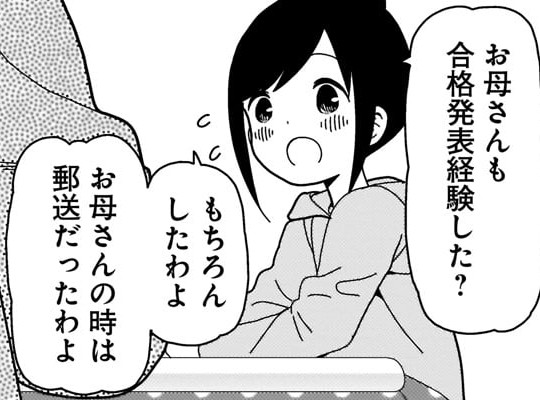
Bocchi’s mother confirms with Bocchi that her exam results will be available online.
- ぼっち:
- 「お母さん合格発表経験した?」
- “Mom, have you ever been through the experience of waiting for exam results?”
- Literal: “Mom, did you experience acceptance-result announcements?”
- お母さん:
- 「もちろん したわよ」
- “Of course!”
- 「お母さんの時は郵送だったわよ」
- “Back in my day, it was sent by mail.”
- Literal: “In Mom's time, it was postal delivery.”
郵送 marks the method of delivery as being sent through the postal service, as opposed to Bocchi’s results being accessible electronically.
Key Points
1郵送 = “sent by mail”
- 郵送 means sending something through the postal service, so here it describes how the exam results were delivered.
2お母さんの時は = “back in my day”
- Here お母さんの時 does not mean a single literal moment; it means when it was Mom’s turn.
3だった shows the old system or state
- 郵送だった is the past form of 郵送だ, so Mom is describing what the procedure used to be.
- That fits the contrast in the scene: Bocchi can check results online, but Mom’s generation had to wait for them to arrive in the mail.
4わよ adds gentle emphasis
- わよ gives the line a warm, conversational, slightly emphatic tone.
- Without it, 郵送だった would sound plainer and more neutral.
Vocabulary
合格 (Passing)
合格 means passing an exam or meeting the standard for acceptance.
発表 (Announcement)
発表 means an announcement, presentation, or public release of information.
経験 (Experience)
経験 means experience, either an event one has lived through or knowledge gained from it.
時 (Time)
時 means time, a moment, or an occasion.
郵送 (Mailing)
郵送 means sending a letter, document, or package by post.
See Also
- Kanji: Sending and escorting with 送
- Future entry: Past tense with 〜た・〜だ
- Grammar: Marking the topic with は and も
- Kanji: Joining and fitting with 合
- Kanji: Launching and arising with 発
ひとりぼっちの○○生活 © its respective creators. It is used here for educational commentary.