Rejected again with 落選
Kanji Explanation: Choosing and selection with 選
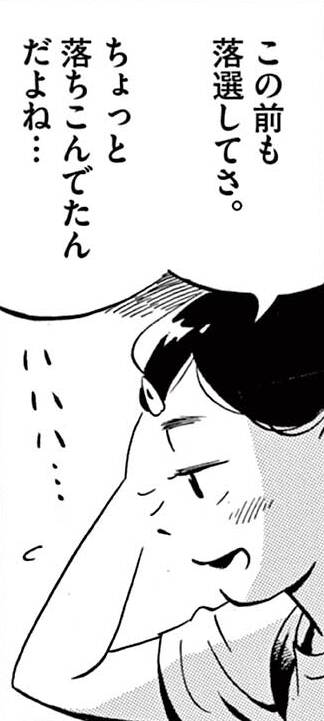
Natsumi walks home at night with Akari, her coworker at the restaurant. When Natsumi mentions that she’s aiming to become a manga artist, Akari says she loves manga and asks to see her work. Natsumi insists it isn’t good enough to show anyone yet.
- なつみ:
- 「この前も落選してさ。」
- “I got rejected again the other day.”
- 「ちょっと落ちこんでたんだよね…」
- “I've been kind of down about it...”
Key Points
- 落選 is failing to be selected in a contest, a screening, or an election. 落 is “fall” and 選 is “selection”, so she has fallen out of the selection.
- Natsumi doesn’t say what she entered. Since she and Akari are talking about her manga, it’s most likely a manga contest or award.
- The opposite is 当選, winning a selection.
- この前も means “the other day too”. The も shows she has been rejected before, which explains why she says her work isn’t ready.
- The て-form leaves the sentence open, and さ is a casual filler that keeps the listener with her. It works like “I got rejected again, and, you know…”
- The next line finishes the thought.
- 落ちこんでた is the casual contraction of 落ちこんでいた, “was feeling down”.
- んだ explains her recent mood, and よね asks Akari to understand. The ellipsis shows she’s a little embarrassed to admit it.
Vocabulary
| Word | English | Meaning |
|---|---|---|
| この前 | The other day | この前 is a recent time in the past, or the most recent one of something. |
| 落選 | Rejection | 落選 is failing to be chosen, as when an entry is turned down in a contest or a candidate loses an election. |
| ちょっと | A little | ちょっと describes a small amount or a short time. It also softens a refusal, or calls someone’s attention, like “hey”. |
| 落ちこむ | To feel down | 落ちこむ means to feel depressed or discouraged, often after a failure or a disappointment. It can also mean to fall into a hole or to slump. It is also written 落ち込む. |
See Also
- Kanji: Choosing and selection with 選
- Grammar: Casual emphasis with さ
- Grammar: Ongoing actions and resulting states with 〜ている
- Grammar: Reasoning with 〜のだ
- Grammar: Marking the topic with は and も