Sacchan's place with 〜んち
Grammar Explanation: One's house with 〜んち
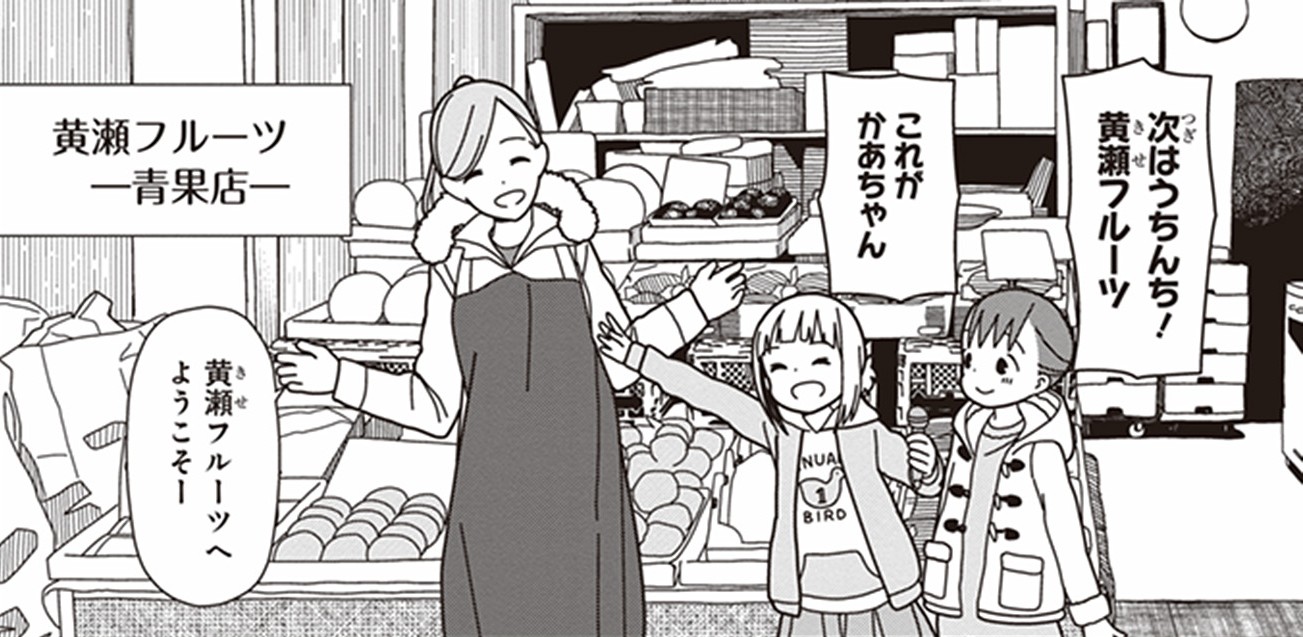
Sacchan and her friends decide to make a movie about the district they live in. They stop by Sacchan’s mother’s shop to film a scene.
- さっちゃん:
- 「次はうちんち!黄瀬フルーツ。これがかあちゃん」
- “Next is my place! Kise Fruits. This is my mom.”
- Literal: “Next is our house/place! Kise Fruits. This is mom.”
- お母さん:
- 「黄瀬フルーツへようこそー」
- “Welcome to Kise Fruits.”
「うちのうち」 is contracted into 「うちんち」.
Key Points
1〜んち means someone’s home or place
- うちんち is casual childlike speech for “my place” or “my family’s place”.
- Here it points to Kise Fruits, Sacchan’s mother’s shop, as part of her home territory.
2The first うち is the owner; んち marks the place
- The phrase stacks “me/my family” plus “place”, so it is stronger than just saying うち alone.
- This casual form is common in speech, especially among children and friends.
3The follow-up identifies the place
- 黄瀬フルーツ names the shop immediately after うちんち.
- これがかあちゃん then introduces the person connected to that place: her mom.
See Also
- Grammar: One's house with 〜んち
- Grammar: Marking the topic with は and も
三ツ星カラーズ © its respective creators. It is used here for educational commentary.