Scared when it comes down to it with いざとなると
Grammar Explanation: When the time comes with いざ〜となると
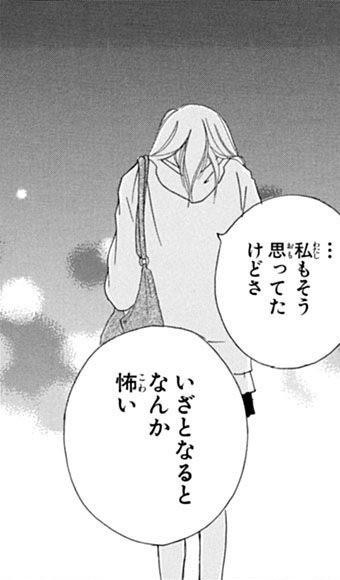
Sayu sees her boyfriend Daiki leaning close to another girl’s face, as if kissing her, and runs off. Her friends catch up. One insists Daiki was only getting something out of the girl’s eye, but Sayu keeps asking what she’ll do if they really were kissing. Ninako reminds her that she once said she’d fight anyone who came to take Daiki away.
- さゆ:
- 「…私もそう思ってたけどさ」
- “...I thought so too, but...”
- 「いざとなるとなんか怖い」
- “Now that it's actually happening, I'm kind of scared.”
Key Points
- いざとなると stands alone here, with no verb or noun before となると. The context supplies the occasion: another girl may really be coming after Daiki.
- いざ stresses that this is real now, not just talk. となると points to the moment she has to face it.
- The reaction runs against what she said before. She’d planned to fight, but now she’s scared.
- そう points back to Ninako’s words: she’d fight anyone who tried to take Daiki. も means she thought so too.
- 思ってた is 思っていた with the い dropped, as casual speech does. It’s “I had been thinking”, what she believed until now.
- けど sets up a contrast, and さ softens it and holds the floor while she gathers her next words.
- なんか makes the feeling vague, “somehow” or “kind of”. She can’t quite put it into words.
Vocabulary
私 (I)
私 means “I” or “me”. It is the standard first-person pronoun in polite speech and is also common in casual speech among women.
そう (So)
そう means “like that” or “that way”. Said alone, it agrees: “right”. After a verb stem or adjective, it means something looks or seems a certain way.
思う (Think)
思う is to have a thought, feeling, belief, or hope about something.
いざ (Actually, for real)
いざ marks the moment something stops being a plan and has to be done for real, as in いざ買うとなると, “when it actually comes to buying”. On its own, it’s an old-fashioned “Now then!” said before starting something.
なんか (Something)
なんか is a casual form of なにか, “something”. After a noun, it means “things like” or “someone like”, often looking down on it. It also means “kind of” or “somehow”.
怖い (Scary)
怖い describes something that makes you afraid.
See Also
- Grammar: When the time comes with いざ〜となると
- Grammar: Contrasting with 〜が〜
- Grammar: Casual emphasis with さ
- Kanji: Privacy and self with 私