Seeing a comet with the naked eye with 肉眼
Kanji Explanation: Seeing and insight with 眼
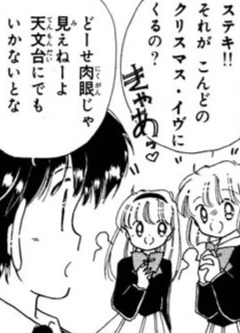
Before class, Asuka Jr. mentions a Graham Comet, which passes near the Earth once every fifty years.
- 涼子:
- 「ステキ!! それが こんどのクリスマス・イヴにくるの?」
- “Awesome!! Is it coming this Christmas Eve?”
- アスカ Jr.:
- 「どーせ肉眼じゃ見えねーよ。天文台にでもいかないとな」
- “You won't be able to see it with the naked eye anyway. You'd have to go to an observatory or something.”
- Literal: “Anyway, you can't see it with the naked eye. You'd have to go to an observatory or something.”
Key Points
1肉眼 = “the naked eye”
- In this scene, 肉眼 means seeing something with your eyes alone, without a telescope or other equipment.
2肉眼じゃ見えねーよ = casual “you can’t see it with the naked eye”
- じゃ here is the casual spoken form of では.
- 見えねー is a rough casual contraction of 見えない.
- The ending よ adds an assertive “I’m telling you” tone, fitting Asuka Jr.’s matter-of-fact attitude.
3どーせ = “anyway / in any case”
- どーせ is a casual spelling of どうせ.
- Here it carries a dismissive nuance: “you’re not going to be able to see it anyway”.
4天文台にでもいかないとな = “you’d have to go to an observatory or something”
- にでも softens the suggestion to something like “to an observatory or somewhere like that”.
- いかないとな is casual for いかないと(いけない)な, expressing necessity: “you’d have to go”.
Vocabulary
肉眼 (Naked eye)
肉眼 means the naked eye, without a telescope, microscope, or other optical aid.
行く (To go)
行く means to go or move toward a place away from the speaker.
See Also
- Kanji: Seeing and insight with 眼
怪盗セイント・テール © its respective creators. It is used here for educational commentary.