Sell-by date with 期限
Kanji Explanation: Boundaries and limits with 限
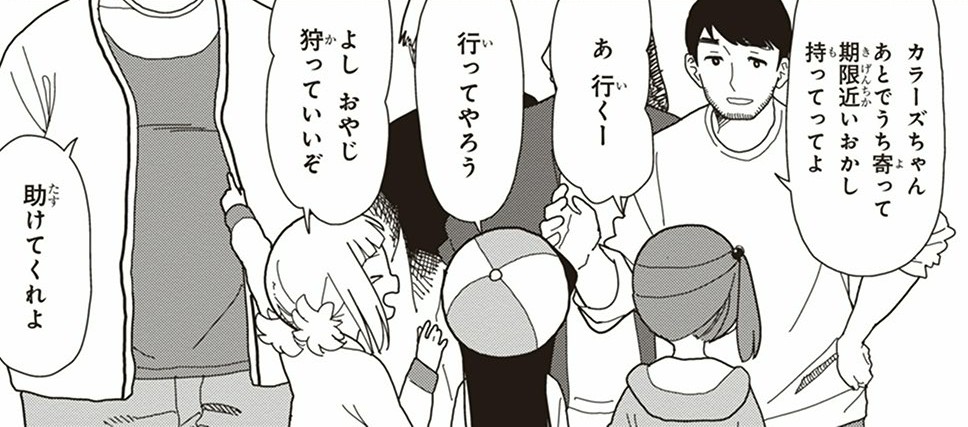
The confectionery shop owner is out shopping when the trio Colors appears.
- おかし屋:
- 「カラーズちゃんあとでうち寄って期限近いおかし持ってってよ」
- “Colors, stop by my place later and take some of these snacks that are near their sell-by date.”
- Literal: “Colors, come by my place later and take snacks whose deadline is close.”
Key Points
1期限 here = an expiry-related time limit
- In this scene, 期限 is being used for the date limit on food, so the natural English idea is “sell-by date” or “expiry date”, not an assignment-style deadline.
- On actual packaging, Japanese often uses more specific labels like 賞味期限 or 消費期限, but in casual speech 期限 alone can still point to that kind of limit when the context is snacks.
2期限(が)近いおかし = “snacks whose expiration date is close”
- 期限近い is a noun-modifying phrase describing おかし.
- The omitted が is very natural in casual speech.
3持ってって = casual contraction of 持って行って
- 持ってって is a spoken contraction of 持って行って.
- Here it means “take them with you”.
4あとでうち寄ってよ = a casual invitation
- 「うち寄って」 means “stop by my place”, with うち meaning “my place / home / shop” depending on context.
- The ending よ gives the line a friendly, casual push: “come by later, okay”.
- ちゃん is an affectionate, informal suffix attached to names, used mainly for children, close friends, and family members.
Vocabulary
うち (I)
うち can mean “I” or “me”, especially in Kansai speech and in casual speech among women. It also has other meanings, including “home” and “inside”.
期限 (Deadline)
期限 means a deadline or the period during which something remains valid.
See Also
- Kanji: Boundaries and limits with 限
- Grammar: Marking the subject with が
三ツ星カラーズ © its respective creators. It is used here for educational commentary.