Short-tempered tribe with 短気
Kanji Explanation: Shortness and brevity with 短
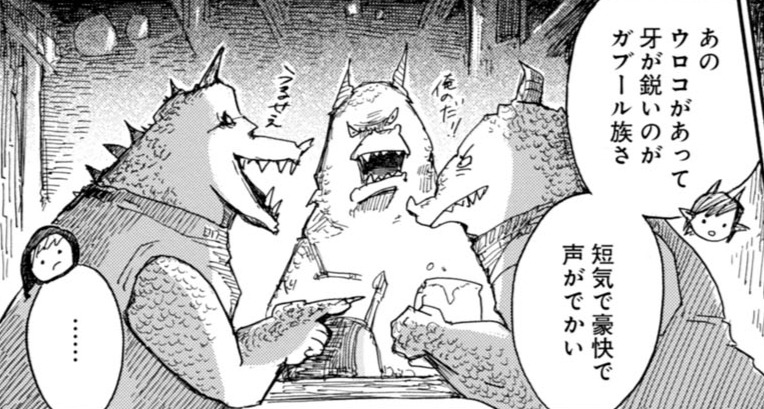
Simon and Nicola stop at a pub for dinner. Their dinner conversation turns to Simon explaining the various temperaments of different tribes in the demon world.
- サイモン:
- 「あのウロコがあって牙が鋭いのがガブール族さ」
- “Those ones with scales and sharp fangs are the Gabool tribe.”
- 「短気で豪快で声がでかい」
- “They're short-tempered, boisterous, and loud.”
- ガブールⒶ:
- 「俺のだ!!」
- “It's mine!!”
- ガブールⒷ:
- 「うるせえ」
- “Shut up.”
Key Points
- Simon describes the tribe’s temper. 短気 means they lose their patience and get angry easily.
- 豪快 describes their bold, uninhibited manner. 声がでかい means they have loud voices.
- 短気で豪快で joins two な-adjective descriptions before the final 声がでかい. Here each で means “and”.
- In the first line, あって is the て-form of ある. It connects having scales with having sharp fangs.
- In ウロコがあって牙が鋭いの, の stands for the people with those features. The following が marks that whole group as the subject being identified as the Gabool tribe.
- The final さ makes Simon’s identification sound casual and confident.
- 俺 is a rough, masculine “I”, and 俺の means “mine”. The speaker leaves the disputed item unnamed and adds だ to assert ownership.
- The さい ending becomes せえ in rough speech. As a reply to the shout, it amounts to “Shut up.”
Vocabulary
あの (That)
あの comes before a noun to mean “that” or “those”. It points to someone or something away from both speakers, or something they both know about.
ウロコ (Scale)
ウロコ means a scale on a fish or reptile. It is also written 鱗.
牙 (Fang)
牙 means a fang or tusk.
鋭い (Sharp)
鋭い means sharp or pointed, as with a blade or fang. It can also describe keen senses or perceptive observations.
族 (Tribe)
族 means a tribe or clan. As a suffix, it names a group of people who share an ancestry, way of life, or other characteristic.
短気 (Short temper)
短気 means a quick temper or impatience. As a な-adjective, it describes someone who gets angry or loses patience easily.
豪快 (Bold and hearty)
豪快 describes a bold, hearty, or uninhibited manner.
声 (Voice)
声 means a voice or an animal’s cry.
でかい (Big)
でかい is a casual, rough word for “big”.
俺 (I)
俺 means “I” or “me”. Men commonly use it in casual speech, and it sounds rougher and more masculine than 私 or 僕.
See Also
- Kanji: Shortness and brevity with 短
- Grammar: Connecting actions with 〜て・〜で
- Future entry: Casual emphasis with さ