So, which is which with それで
Grammar Explanation: The reason or result with それで
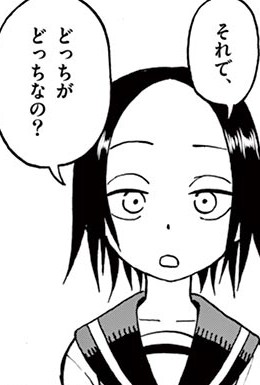
Mina tells Sanae that if you clasp your hands together, you can know whether you were a boy or a girl in a past life. When Mina interlocks her fingers, her left thumb is on top. For Sanae, it’s her right thumb. In the past, one was a boy, and the other was a girl.
- サナエ:
- 「それで、どっちがどっちなの?」
- “So, which is which?”
- Literal: “So, which one is which?”
Key Points
1どっちがどっち = “which one is which”
- This asks how two options map onto two outcomes.
- In context, Sanae wants to know which hand position means “boy” and which means “girl”.
2が marks the item to be identified
- “どっちが” sets up the unknown item whose identity or role is being sorted out.
- The sentence is essentially asking: “So, which one corresponds to which result?”
- それで at the start of a sentence refers back to something previously said and introduces the result, much like “so” or “therefore” or “and then”.
See Also
- Grammar: The reason or result with それで
あしたは土曜日 © its respective creators. It is used here for educational commentary.