Suddenly remembering with 思い出す
Grammar Explanation: Starting something with 〜出す
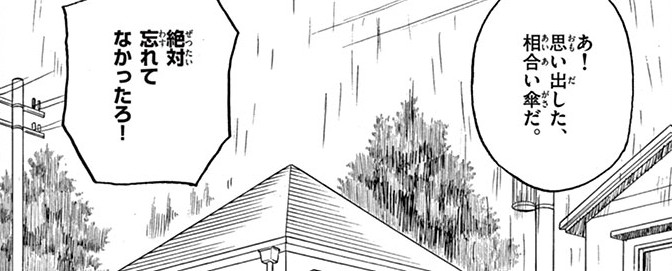
Takagi and Nishikata share an umbrella to walk home after school. Takagi says she completely forgot the term for two people sharing an umbrella. Nishika, with embarrassment, mutters that it’s あいあいがさ. When Takagi asks him to repeat it louder, he keeps quiet in his embarrassment.
- 高木:
- 「あ! 思い出した、相合い傘だ。」
- “Ah, I just remembered, it's (相合:あいあ)い(傘:がさ).”
- Literal: “Ah! I thought it out, it's (相合:あいあ)い(傘:がさ).”
- 西片:
- 「絶対忘れてなかったろ!」
- “You totally didn't forget it!”
Nishikata’s embarassment stems from あい being the same pronunciation as 愛, a coincidence that lends to the idea of romance between two people who share an umbrella.
Key Points
1思い出す = “remember”
- The compound combines 思う with 出す, giving the sense of a memory coming out into awareness.
- In this line, the meaning is “Oh, I remember now.”
2Why 出す matters here
- 〜出す can add a sense of something beginning or suddenly emerging.
- That is why 思い出した feels more like “just remembered” than a flat “remembered”.
Vocabulary
絶対 (Absolute)
絶対 means absolute or unconditional. As an adverb, it means definitely or under no circumstances, depending on the sentence.
See Also
- Grammar: Starting something with 〜出す
- Future entry: Past tense with 〜た・〜だ
- Grammar: The copula だ
からかい上手の高木さん © its respective creators. It is used here for educational commentary.