Thank you for always being by side with 本当にありがとう
Vocabulary Explanation: Ways to say thank you in Japanese
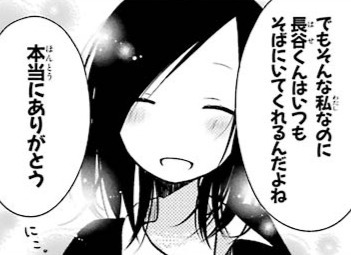
Due to a condition where she loses all memories of friends every Monday morning, Fujimiya acts cold toward classmates to avoid becoming friends. While eating lunch on the roof with Hase, she remarks how hard it is to act that way. Hase says it’s because she’s naturally a nice person. He recalls when he first tried becoming friends with her, how Fujimiya avoided eye contact with him and gave only brief responses. Fujimiya is shocked to hear how she had treated him.
- 藤宮:
- 「でもそんな私なのに長谷くんはいつもそばにいてくれるんだよね」
- “But even though I was like that, Hase-kun, you're always by my side, aren't you?”
- 「本当にありがとう」
- “Thank you, really.”
Key Points
1本当にありがとう = “Thank you, really”
- 本当に strengthens ありがとう, making Fujimiya’s thanks heartfelt.
2長谷くんはいつもそばにいてくれる
- そばにいる means “to be by someone’s side” or “to stay close”.
- 〜てくれる presents Hase’s staying as something Fujimiya receives and appreciates.
3そんな私なのに = “even though I was like that”
- そんな私 points back to how coldly Fujimiya treated Hase.
- Because 私 is a noun, it takes な before のに. Hase stayed close despite her behavior.
4The ending んだよね
- んだ is the casual form of のだ. It frames Hase’s support as something Fujimiya has come to understand.
- よね states what she believes, then asks Hase to confirm it. This gives the line its gentle “aren’t you?” ending.
Vocabulary
私 (I)
私 means “I” or “me”. It is the standard first-person pronoun in polite speech and is also common in casual speech among women.
See Also
- Vocabulary: Ways to say thank you in Japanese
- Grammar: Receiving kindness with 〜てくれる
- Future entry: Even though with 〜のに
- Grammar: Reasoning with 〜のだ
- Future entry: Seeking agreement with ね
- Kanji: Privacy and self with 私
一週間フレンズ。 © its respective creators. It is used here for educational commentary.