Thank you for inviting me with お招きいただきありがとうございました
Vocabulary Explanation: Ways to say thank you in Japanese
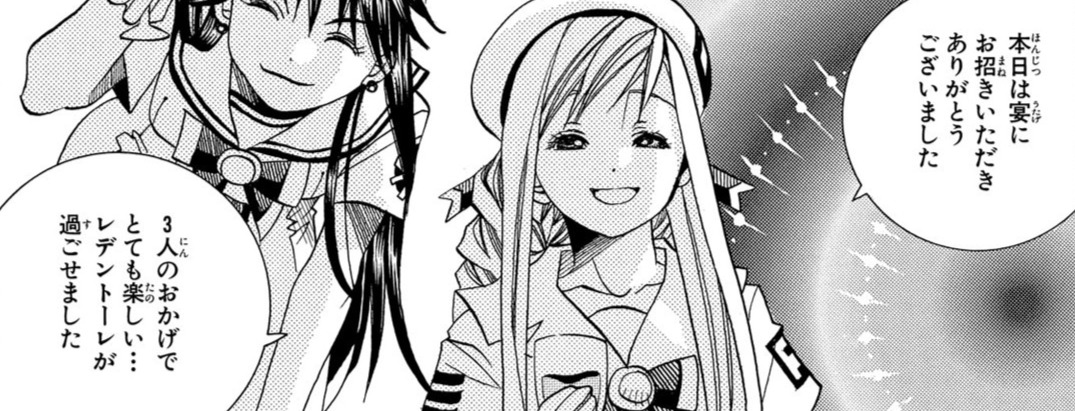
As part of their training, Akari, Aika, and Alice host a Festa del Redentore dinner. After, the guests gather before them.
- アリシア:
- 「本日は宴にお招きいただきありがとうございました」
- “Thank you for inviting me to the party today.”
- 「3人のおかげでとても楽しい…レデントーレが過ごせました」
- “Thanks to the three of you, I had a really fun time at the *Redentore*.”
Key Points
1お招きいただきありがとうございました = “Thank you for inviting me”
- The formal pattern お + verb stem + いただく presents Alicia as receiving the hosts’ action. Here 招く becomes お招きいただく.
2ありがとうございました looks back on a completed occasion
- The past polite form fits this scene because the dinner has ended and the guests are giving their closing thanks.
- ありがとうございます could thank someone politely while an occasion is still underway. ありがとうございました treats it as complete.
3本日は宴に sets the occasion
- 本日は makes “today” the formal time frame for Alicia’s thanks.
- 宴に marks the event she was invited to. 宴 means a feast or banquet and gives the line a ceremonial tone.
43人のおかげで = “thanks to the three of you”
- おかげで names the three hosts as the reason Alicia enjoyed the event.
- 過ごせました is the polite past potential of 過ごす. It says she was able to spend the Redentore enjoyably.
- With the potential form, レデントーレ takes が as the occasion she was able to enjoy.
Vocabulary
本日 (Today)
本日 is a formal word for today, common in announcements and customer service.
See Also
- Vocabulary: Ways to say thank you in Japanese
- Grammar: Polite style with です and ます
- Future entry: Able to do with 〜れる・〜られる
- Grammar: Marking the topic with は and も
- Kanji: Origins and main things with 本
ARIA The MASTERPIECE © its respective creators. It is used here for educational commentary.