Thanks for the boxed lunch with サンキュ
Vocabulary Explanation: Ways to say thank you in Japanese
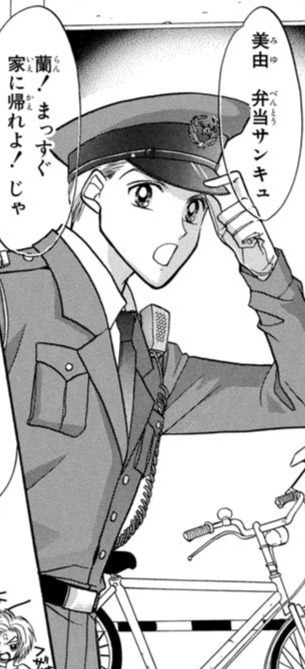
Miyu visits Yamato at his police box workplace to bring him a packed lunch. She sees her friend, Yamato’s sister Ran, there and stops by to see her next. A call comes in, and Yamato heads to help provide backup.
- 大和:
- 「美由 弁当サンキュ」
- “Miyu, thanks for the boxed lunch.”
- 「蘭! まっすぐ 家に帰れよ! じゃ」
- “Ran! Head right home! Bye!”
Key Points
1サンキュ = “thanks”
- サンキュ is a casual borrowing from English.
- サンキュー, with a long final vowel, is another common spelling.
2家に帰れよ = “go home”
- 帰れ is the plain imperative of 帰る. It makes Yamato’s instruction to Ran direct and rough.
- 家に marks the destination, while まっすぐ tells her to go straight home without stopping elsewhere.
- Sentence-final よ adds an insistent push to the command.
3Standalone じゃ = “well then” or “bye”
- At the end of this exchange, じゃ closes the conversation as Yamato leaves. It is the casual contraction of では.
Vocabulary
弁当 (Boxed meal)
弁当 is a boxed meal packed to eat at school, work, or away from home.
See Also
- Vocabulary: Ways to say thank you in Japanese
- Grammar: The plain imperative
- Future entry: Informing with よ
- Future entry: How casual contractions work
GALS! © its respective creators. It is used here for educational commentary.