Thanks for the sunset photograph with ありがと
Vocabulary Explanation: Ways to say thank you in Japanese
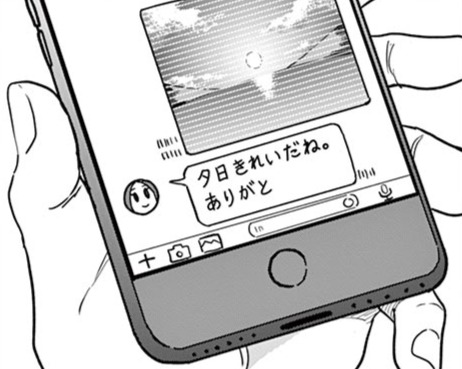
On her way home from the store, Takagi sees Nishikata out jogging. She asks where he’s heading, and he says he doesn’t really have a destination, but he’s jogged as far as the beach before. Takagi doesn’t seem to fully believe him, so after they part ways, Nishikata heads specifically for the beach. Once there, he takes a photograph and sends it to Takagi as proof of his accomplishment.
- 高木:
- 「夕日きれいだね。ありがと」
- “The sunset is pretty, isn't it? Thanks.”
Key Points
1ありがと is a clipped, casual ありがとう
- The final long vowel of ありがとう is shortened. The meaning stays the same, but ありがと sounds looser and suits Takagi’s familiar speech with Nishikata.
2The fuller sentence is 夕日がきれいだね
- Takagi omits the subject marker が after 夕日. The subject remains clear from context.
- きれい behaves as a な-adjective, so its plain affirmative form takes the copula だ.
3ね turns the observation into a shared reaction
- Sentence-final ね invites Nishikata to agree.
See Also
- Vocabulary: Ways to say thank you in Japanese
- Future entry: Seeking agreement with ね
- Grammar: The copula だ
- Grammar: Marking the subject with が
からかい上手の高木さん © its respective creators. It is used here for educational commentary.