Thinking it's the motive with と思う
Grammar Explanation: Quoting and reporting with と and って
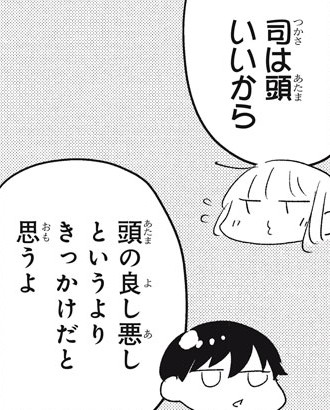
Makoto and Tsukasa meet to study for an upcoming test. When Makoto spends her study time complaining about it, Tsukasa asks if she hates studying. Makoto says it’s not that she hates it so much as it’s difficult. She asks if Tsukasa likes studying, and he says it’s fun to learn new things and connect them to his everyday life.
- 真:
- 「司は頭いいから」
- “That's because you're smart.”
- 司:
- 「頭良し悪しというよりきっかけだと思うよ」
- “I think it's less about whether you're smart or not, and more about having the right motive.”
- Literal: “Rather than whether you're smart or not, I think it's a trigger.”
Key Points
1きっかけだと思う = “I think it’s the motive”
- The と marks the content of Tsukasa’s thought: きっかけだ “it’s the motive”.
- Because きっかけ is a noun, it needs だ before と思う.
2What というより is contrasting
- 頭良し悪しというより means “rather than whether someone is smart or not”.
- Tsukasa is pushing back on Makoto’s 頭いいから by saying the deciding factor is not raw smarts.
3良し悪し = whether something is good or bad
- Here 頭良し悪し means “being smart or not smart”.
4Casual ending よ
- The final よ presents Tsukasa’s view gently but clearly, as information he wants Makoto to take in.
Vocabulary
頭いい (Intelligent)
頭いい means smart or quick-witted.
良し悪し (Good and bad)
良し悪し means good and bad, quality, or the merits and faults of something.
きっかけ (Trigger)
きっかけ is the event or reason that prompts an action or change.
思う (Think)
思う means to think, feel, believe, expect, or hope.
See Also
- Grammar: Quoting and reporting with と and って
- Grammar: Marking the topic with は and も
幼なじみが強敵です。 © its respective creators. It is used here for educational commentary.