Ticket inspection aboard a water bus with 船内
Kanji Explanation: Boats and vessels with 船 (Future entry)
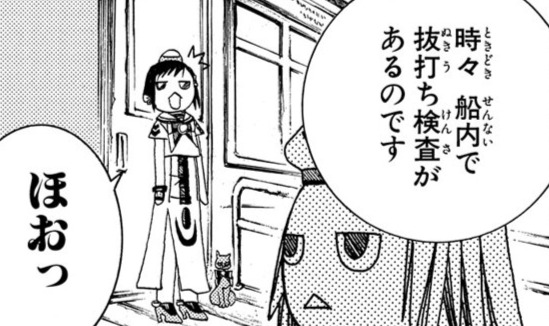
During a meal before practice, Aika notices how Akari is friends with many strangers. Akari says she’ll be missing practice that afternoon because Alicia asked her to buy something. Once she’s gone, Aika and Alice decide to tail her and see if they can learn her secret to being friends with everyone. The two lose sight of Akari, but Alice suggests Akari may have boarded the vaporetto, the water bus. They decided to board as well, but Aika’s never been on the vaporetto before. Alice explains the ticket system, which doesn’t require showing one’s ticket when getting off, but that doesn’t mean they can skip paying.
- アリス:
- 「時々 船内で抜き打ち検査があるのです」
- “Every now and then, they do surprise inspections on board.”
- Literal: “Sometimes there are surprise inspections inside the boat.”
Key Points
- Here 船内で sets the location of the inspection: it happens aboard the vaporetto, not at the dock.
- 船 means “boat”, and 内 means “inside”, so the compound literally means “inside the boat”.
- 抜き打ち means something done without warning, so 抜き打ち検査 is an unannounced ticket check rather than a routine scheduled inspection.
- で marks where the event happens, and がある means “there is”.
- So the line is literally “Every now and then, there are surprise inspections on board.”
- Alice is explaining the ticket system to someone unfamiliar with it, so があるのです has a calm explanatory feel.
- In plainer speech, this could be があるんです or just がある.
Vocabulary
| Word | English | Meaning |
|---|---|---|
| 時々 | Sometimes | 時々 describes something that happens now and then. |
| 船内 | On board | 船内 means aboard or inside a boat or ship. |
| 抜き打ち | Surprise | 抜き打ち describes something done without warning, such as a surprise inspection. |
| 検査 | Inspection | 検査 is examining something carefully to see whether anything is wrong or whether it meets a standard. |
| ある | To exist | ある is to exist or be in a place, for things and plants rather than people or animals. It also means to have something, or for an event to take place. |
See Also
- Grammar: Reasoning with 〜のだ
- Grammar: Compound voicing with 連濁
- Kanji: Checking and examination with 検
- Kanji: Investigation and inspection with 査
- Kanji: Time and occasions with 時