To end up betraying with 〜ことになる
Grammar Explanation: To end up being with 〜ことになる
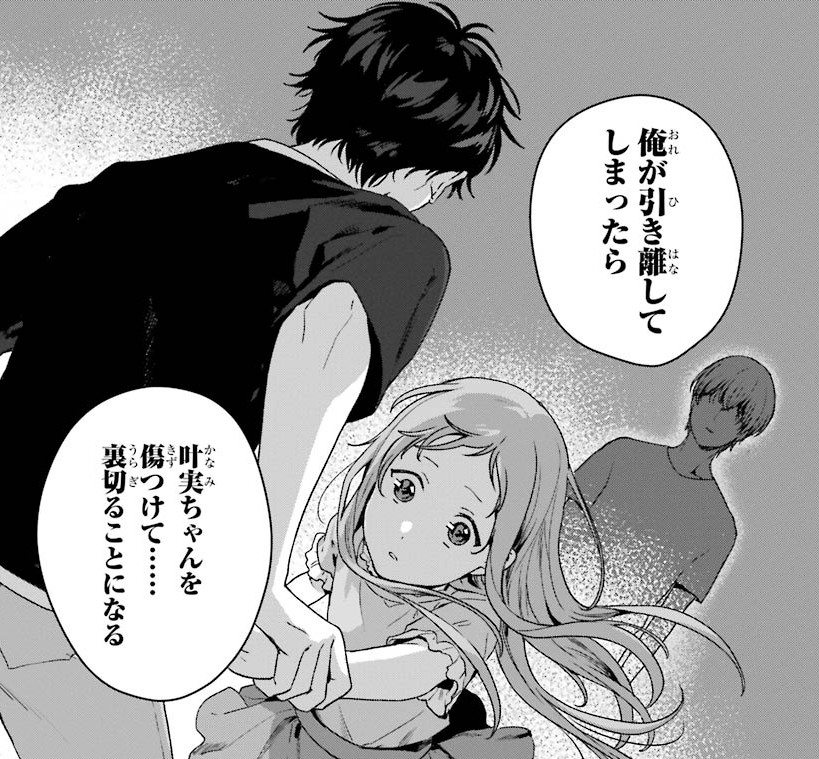
Makoto explains to Misuzu that he’s been looking into various things since meeting Kanami, such as housing for orphans. However, he realizes what Kanami wishes for is to have her once-kind brother back to the way he used to be.
- 真:
- 「俺が引き離してしまったら」
- “If I separate her from him...”
- 「叶実ちゃんを傷つけて…… 裏切ることになる」
- “...I'd be hurting Kanami... I'd end up betraying her.”
- Literal: “I would hurt Kanami-chan... and it would become the situation of betraying her.”
Key Points
1裏切ることになる means the result would be betrayal
- Makoto is not saying he wants to betray Kanami.
- He means separating her from her brother would end up having that effect.
2引き離してしまったら adds regret to the condition
- 俺が引き離してしまったら means “if I were to separate them”.
- 〜てしまう adds the sense of doing something regrettable.
3The pause shows the emotional weight
- 傷つけて leads into 裏切ることになる.
- The structure piles up consequences: hurting her, then betraying her trust.
- ちゃん is an affectionate, informal suffix attached to names, used mainly for children, close friends, and family members.
Vocabulary
俺 (I)
俺 means “I” or “me”. Men commonly use it in casual speech, and it sounds rougher and more masculine than 私 or 僕.
See Also
- Grammar: To end up being with 〜ことになる
- Grammar: Doing completely or ending up doing with 〜てしまう and 〜ちゃう
- Future entry: If and when with 〜たら
- Grammar: Connecting actions with 〜て・〜で
レンタルおにいちゃん © its respective creators. It is used here for educational commentary.